
Laser treatments have become a popular approach to addressing common skin concerns in Singapore, be it pigmentation, acne scars, or dull skin. But with so many types of laser skin treatments available, it can be difficult to determine exactly where to start.
Each laser therapy works differently: some gently renew the skin’s surface, while others reach deeper layers to restore balance from within. In this guide, we explore the various types of laser skin treatments available in Singapore, what they can help with, and what to expect before and after your sessions.
Key takeaways
- There are several types of laser skin treatments in Singapore, each designed to address specific concerns such as pigmentation, scars, and uneven texture.
- Using ultra-short energy pulses, pico lasers can help manage pigmentation, acne scars, and dullness, typically involving minimal recovery time.
- Fractional lasers promote collagen renewal through controlled resurfacing. They are commonly used for textural concerns, fine lines, and scars.
- Long-pulsed lasers are often used to address vascular conditions like redness or visible capillaries, as well as skin toning.
- The effectiveness and safety of these types of laser skin treatments depend on a doctor’s assessment of your skin type, concern severity, and overall suitability.
- Consistent post-treatment care, such as sun protection, hydration, and avoiding harsh products, helps the skin recover smoothly.
The main types of laser skin treatment in Singapore
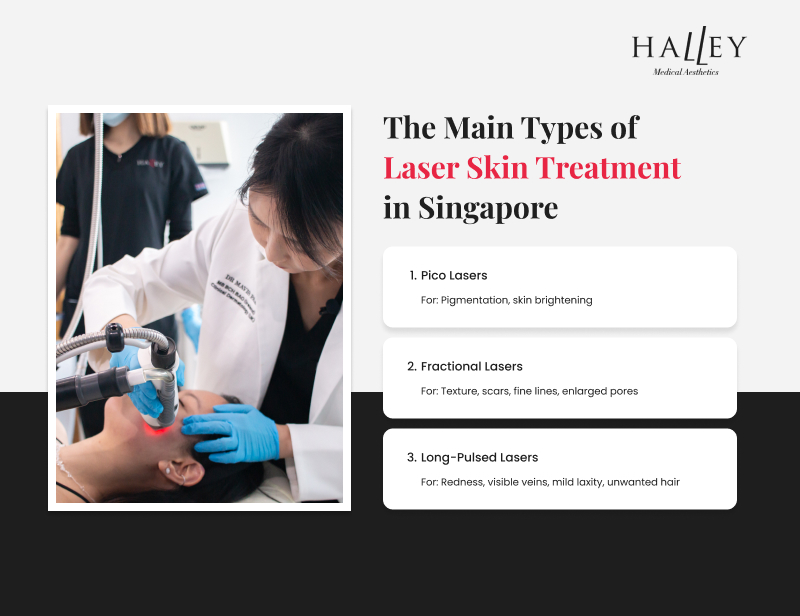
Pico Lasers: For pigmentation, skin brightening
Pico lasers are non-ablative systems that use short bursts of energy, measured in trillionths of a second, to break down pigment clusters into fine particles. These are then naturally cleared by the body’s lymphatic system. Additionally, by relying on vibrational energy rather than heat, these types of laser skin treatments can minimise the risk of damage to the surrounding skin.
Pico Laser treatment typically comes in several different wavelengths, including:
- 532 nm: Targets surface pigmentation such as freckles and sun spots.
- 755 nm: Reaches the mid-dermal layer to address uneven tone and mild textural irregularities.
- 1064 nm: Penetrates deeper layers to manage stubborn pigmentation. It is also suitable for skin that is more prone to post-laser sensitivity.
Sometimes, doctors may use a combination of wavelengths to target both surface-level and deeper pigmentation. Halley Medical Aesthetics has two different pico laser machines to cover all three different wavelengths to address different layers of the skin and distinct skin concerns, depending on the individual’s condition.
What skin concerns can Pico Laser address?
- Pigmentation such as melasma, freckles, or sun damage
- Tattoo removal
- Overall skin brightening
Pros and cons of Pico Laser treatment
Pros:
- Minimal laser treatment downtime compared to ablative options
- Customisable wavelengths for various skin tones and concerns
- Typically suitable for daily routines with minor disruption
Cons:
- Several sessions are usually needed for optimal results
- Temporary redness, warmth, or swelling may occur
Fractional Lasers: For collagen stimulation and smoother texture
Fractional Laser treatment is a form of laser resurfacing in Singapore, and is one of the more intensive types of laser skin treatment. They work by delivering light energy in a grid-like pattern, creating tiny columns of treated skin surrounded by untouched areas. These micro-zones trigger the body’s natural repair process, encouraging the formation of new skin cells and collagen fibres.
There are two main types of fractional laser skin treatments, ablative and non-ablative lasers, and each differs in intensity and recovery time:
- Non-ablative options heat the deeper layers of the skin without removing the surface. This promotes gradual renewal with minimal disruption to daily activities.
- Ablative fractional lasers, such as CO2 or erbium laser systems, remove thin layers of skin while stimulating deeper regeneration. This approach can address more established texture or scarring but generally involves a longer recovery period.
What skin concerns can Fractional Lasers address?
- Acne and surgical scars
- Fine lines, wrinkles, and enlarged pores
- Uneven skin texture
- Sun-related skin changes
Pros and cons of Fractional Laser treatments
Pros:
- Can be tailored to target both surface and deeper concerns
- Leads to gradual textural improvement and skin firmness
- Customisable intensity and settings
Cons:
- Fractional laser downtime can vary greatly, from one to three days for non-ablative treatments to about a week with ablative options.
- Temporary redness, flaking, or sensitivity may occur
- May not be ideal for very sensitive or darker skin without proper evaluation
Long-pulsed Lasers: For redness, veins, and mild skin laxity
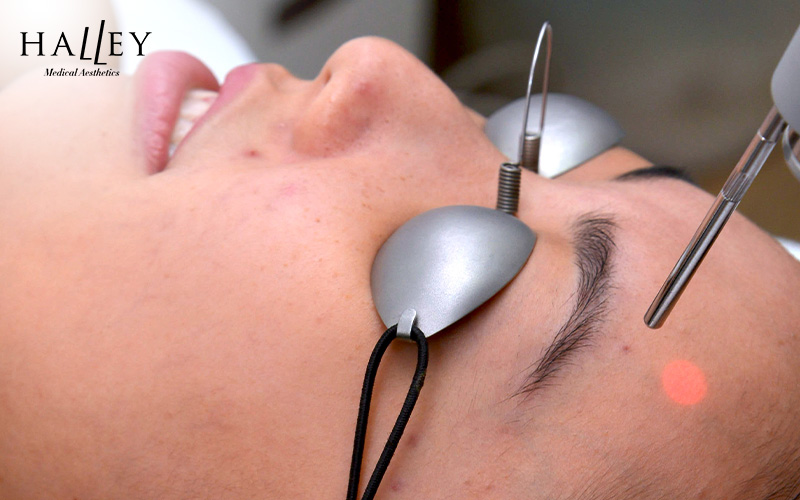
These are a type of non-ablative laser skin treatment that delivers energy in relatively longer pulses (in milliseconds). The prolonged pulse duration enables heat penetration beneath the skin’s surface while keeping it confined to larger, deeper targets like blood vessels. This allows the surrounding skin surface to cool and minimises damage.
The energy is primarily absorbed by two main chromophores:
- Haemoglobin: Found in blood vessels; targeting it helps manage facial redness, visible veins, and broken capillaries.
- Melanin: Present in hair follicles; targeting it helps reduce unwanted hair growth over time.
What skin concerns can Long-pulsed Lasers address?
- Broken capillaries or facial redness
- Active acne and inflammation
- Mild textural irregularities
- Unwanted facial or body hair
- Mild laxity or dullness
Pros and cons of Long-pulsed Laser treatment
Pros:
- Can be applied to both vascular and hair concerns
- Supports overall skin rejuvenation
- Generally safe when performed by trained doctors
Cons:
- More than one session is often needed
- Temporary redness or swelling is possible
- Not equally effective on all hair types or skin tones
What to know before your laser treatment
What are the common risks and contraindications?
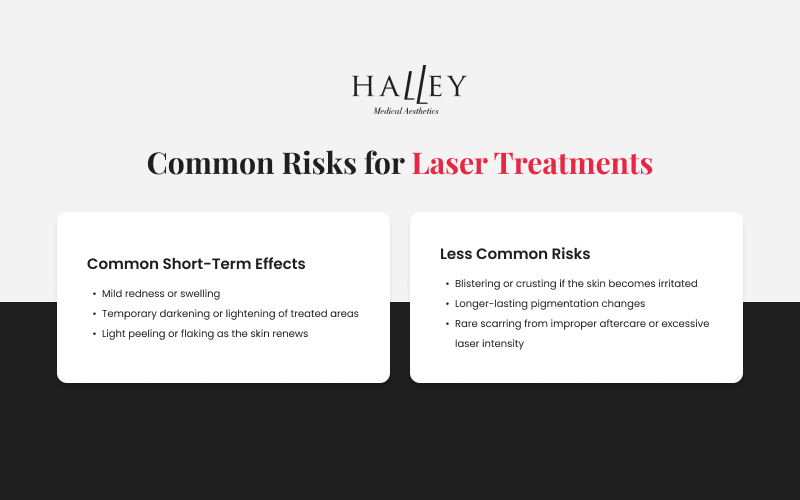
Although the different types of laser skin treatment described above are generally well-tolerated when performed by trained professionals, all skin rejuvenation procedures carry some degree of risk. It’s important to understand these possibilities and set realistic expectations.
Common short-term effects
- Mild redness or swelling that subsides within a few hours or days
- Temporary darkening or lightening of treated areas as the skin renews
- Gentle peeling or flaking as older surface cells shed naturally
These reactions are part of the skin’s normal healing process and usually resolve on their own with appropriate care.
Less common risks
- Blistering or crusting that may occur if the treated area becomes overly irritated
- Longer-lasting pigmentation changes like hypopigmentation, particularly in darker skin tones
- Rare instances of scarring, which can occur if post-treatment instructions are not followed or if excessive energy levels are used
Contraindications (When laser treatments may not be suitable)
Laser treatments may not be suitable for everyone, as certain health or skin conditions can increase the risk of side effects or affect how the skin heals.
- Pregnancy or breastfeeding
- Active skin infections, rashes, or open wounds
- Uncontrolled medical conditions that affect healing (e.g., diabetes)
- Recent use of isotretinoin or other photosensitising medication
- A known history of abnormal scarring or keloid formation
An important note on laser devices and expertise
While there are many different types of laser skin treatments and medical devices available today, results can vary depending on how the treatment is selected and performed. A doctor’s experience and understanding of skin physiology play a crucial role in determining the right laser settings, wavelength, and treatment plan for each individual.
This is particularly relevant in Singapore, where factors such as humidity, frequent sun exposure, and the diversity of Asian skin tones can influence how the skin reacts to energy-based procedures. A professional who is familiar with these considerations will be able to tailor treatment intensity and aftercare guidance to support a smoother recovery and reduce the likelihood of post-inflammatory pigmentation or other complications.
Aftercare and recovery tips

Recovery time after any type of laser skin treatment varies depending on the laser’s depth and strength. Following the recommended aftercare guidelines is essential for supporting healing and maintaining the skin’s protective barrier.
Immediately after treatment
Keeping the treated area clean and avoiding unnecessary contact can help reduce the risk of irritation or infection.
- Refrain from touching, scratching, or rubbing the treated area.
- Avoid applying makeup or heavy skincare products for at least 24 hours unless approved by your doctor.
- If your skin feels warm, a cool compress or thermal spring water mist can help soothe the area.
How to navigate skincare post-laser treatment
During recovery, the skin barrier is temporarily more delicate. Using gentle and hydrating products supports repair and helps minimise dryness or flaking.
- Cleanse with mild, fragrance-free cleansers and pat dry gently.
- Apply moisturisers that contain calming ingredients such as ceramides, panthenol, or aloe vera to keep the skin hydrated.
- Use a broad-spectrum sunscreen (SPF 30 or higher) every morning, even indoors, as post-laser skin is more sensitive to UV exposure.
- Avoid exfoliating acids (like glycolic or salicylic acid), retinoids, or scrubs until your doctor advises that your skin has fully recovered.
- If topical recovery creams or serums were prescribed, use them as directed to support skin barrier restoration and reduce redness.
How to adjust your lifestyle post-laser treatment
Small lifestyle adjustments can also make a difference in how the skin recovers.
- Limit direct sun exposure and use wide-brimmed hats or umbrellas when outdoors.
- Avoid hot showers, saunas, and strenuous exercise for 24 to 48 hours, as excessive heat or sweat may aggravate sensitivity.
- Stay hydrated and consume antioxidant-rich foods (such as fruits and vegetables) to support natural tissue repair.
- Avoid smoking and alcohol for a few days post-procedure, as both can delay recovery.
When you should seek follow-up advice
Contact your clinic if you experience any of the following:
- Redness, swelling, or discomfort that lasts longer than expected
- Blistering, oozing, or signs of infection
- Unusual pigmentation changes or delayed healing
Proper aftercare helps reduce side effects and supports smoother healing, especially if you are undergoing multiple types of laser skin treatment over time.
Frequently asked questions
1. How many sessions of laser treatment are usually needed?
The number of sessions depends on the type of laser skin treatment and your specific concern. For instance, certain laser treatments for pigmentation may need several sessions spaced a few weeks apart, while fractional resurfacing might require fewer but more intensive treatments.
2. Is there downtime after a laser procedure?
Yes, but the length varies between different types of laser skin treatments. Pico and non-ablative fractional lasers typically have minimal to no downtime, while ablative Fractional CO2 Lasers can take longer to heal. Your doctor will advise on the expected healing timeline based on your treatment plan.
3. Are laser treatments suitable for all skin types?
Not all types of laser skin treatment are universally suitable. Darker complexions may be more prone to pigmentation changes, which is why wavelength selection and treatment settings must be carefully adjusted. Non-ablative systems such as pico lasers and certain long-pulsed lasers can often be tailored for Asian skin when performed by professionals.
4. Can I combine laser treatments with other procedures?
Yes, some types of laser skin treatment can be performed alongside other non-invasive options such as skin boosters or gentle tightening procedures. However, proper timing is important to allow the skin to recover between sessions. Your doctor will determine a suitable treatment sequence to minimise irritation and ensure the skin has adequate time to heal.
5. How should I prepare before my laser treatment?
Preparation helps ensure your skin is in optimal condition for the procedure. Avoid excessive sun exposure, tanning, and active skincare ingredients such as retinoids or exfoliating acids for about a week before your session. Inform your doctor of any medications or recent treatments so that the laser settings can be adjusted appropriately.
Your next step: Understanding before deciding
When it comes to the many types of laser skin treatments in Singapore, there is no single “best” option. Each laser, from Pico systems to Fractional CO2 technologies, operates differently to target specific concerns and depths within the skin. The right approach depends on factors such as your skin type, condition, and recovery preferences.
A comprehensive consultation with a qualified professional allows for a proper assessment of these factors and helps guide you toward a plan that aligns with your goals and comfort level. At Halley Medical Aesthetics, our doctors take a personalised approach to every consultation, assessing your skin’s needs and recommending treatments that are evidence-based and aligned with your goals.
Book your first appointment with us today.
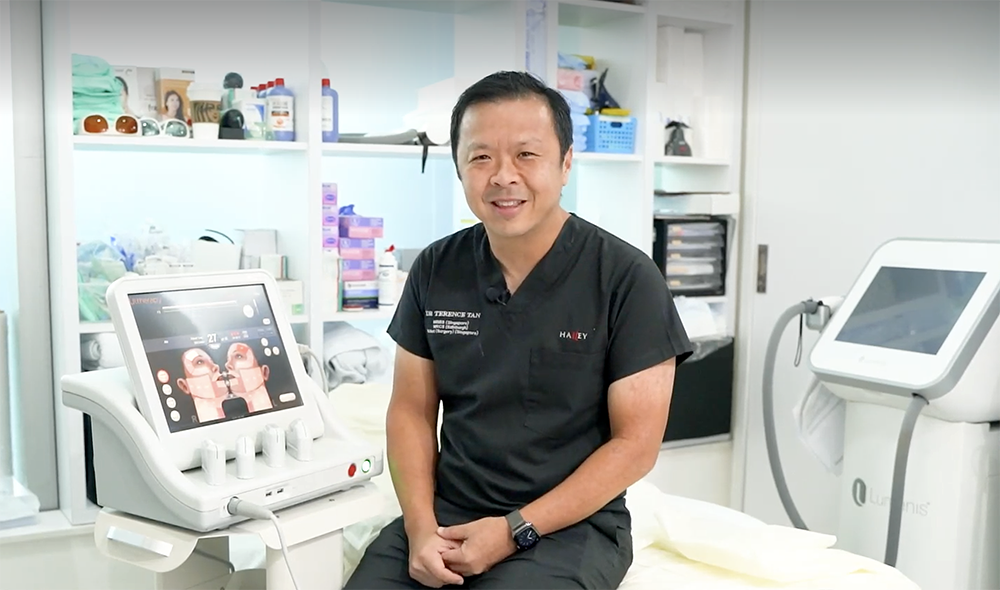
Dr. Terence Tan
MBBS (Singapore), MRCS (Edinburgh), M.Med (Surgery) (Singapore)
“Laser treatments require careful assessment and proper technique. Working with a qualified clinic helps ensure that the right approach is chosen, expectations are clearly explained, and the skin is managed appropriately throughout the process.”


