
Key takeaways
- Spider veins on the face are common, small dilated vessels that often appear due to genetics, UV exposure, temperature changes, hormones, or skin conditions.
- They are usually harmless but may become more visible without treatment.
- Laser therapy, including long-pulsed lasers, remains a widely used treatment option for facial veins.
- Doctors will conduct a personalised assessment to help determine the most suitable laser vein removal technique for your skin.
Key takeaways
- Freckles and melasma are both forms of pigmentation but differ in cause, depth, and behaviour.
- Freckles are usually superficial and sun-related, while melasma is commonly associated with hormonal fluctuations and tends to be more persistent.
- Doctors may recommend different treatment options depending on the type of pigment and your skin’s sensitivity.
- Daily sun protection and gentle skincare are essential for prevention and maintenance.
- Professional assessment by a doctor helps ensure treatments are appropriate, controlled, and responsive to your skin’s needs.
Not all dark spots are the same. If patches or speckles have started appearing on your face, it can be difficult to tell whether they are harmless freckles or a form of discolouration that needs closer attention. Below, we break down the key differences between freckles vs. melasma, allowing you to better understand what might be going on underneath the surface.
What is pigmentation?
Pigmentation refers to areas of skin that appear darker due to increased melanin production. Specific cells called melanocytes produce melanin as a protective response. The melanin is then transferred to the surrounding skin cells, where it influences overall skin tone and evenness.
Several factors can stimulate melanocyte activity:
- Ultraviolet (UV) exposure is the most common trigger, as UV radiation signals the skin to produce more pigment for protection.
- Hormonal changes can also increase melanocyte activity, leading to uneven pigment production and changes in skin tone.
- Genetics influence how melanocytes respond to different triggers.
- Inflammation or skin injury may cause pigment to accumulate in specific areas as part of the skin’s healing process (post-inflammatory hyperpigmentation).
Freckles vs. melasma: Key differences
When discussing different types of skin pigmentation, freckles and melasma are often grouped together due to their appearance. However, their underlying mechanisms and treatment approaches differ.
1. What cause freckles and melasma
Freckles are largely determined by genetics, particularly variations in genes that regulate melanin production. Individuals with lighter skin types or a family history of freckles tend to develop them more easily. UV exposure then activates melanocytes, increasing melanin production in small, localised areas of the skin. This is why freckles often darken after sun exposure and become more visible over time.
Melasma develops through a more complex interplay of hormonal signalling and environmental triggers. Hormones such as oestrogen and progesterone can stimulate melanocytes, increasing melanin production. This heightened sensitivity means that even low levels of UV light or heat can trigger excess pigment formation. As a result, melasma commonly appears during pregnancy, with oral contraceptive use, or during periods of hormonal fluctuation.
2. What they look like
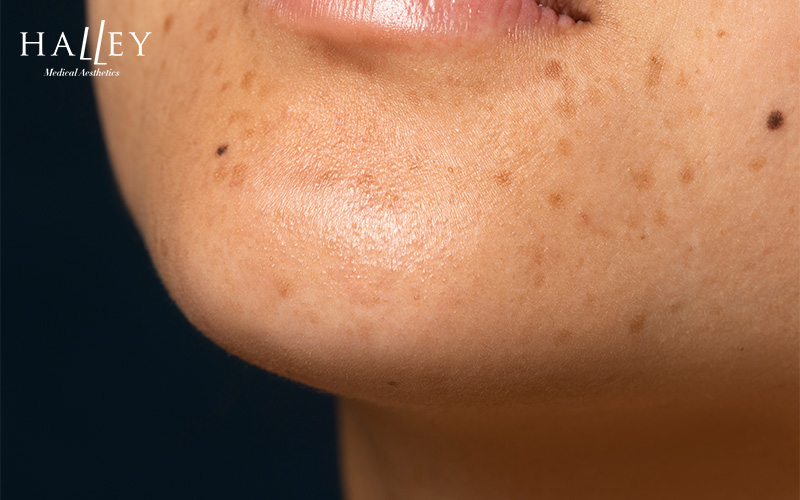
Freckles appear as small, well-defined spots with clear edges. They are usually uniform in colour and size, ranging from light tan to brown. These spots are scattered rather than clustered and tend to appear symmetrically across sun-exposed areas such as the nose, cheeks, shoulders, and arms.
Melasma presents differently. Instead of distinct spots, it appears as broader patches with irregular borders that gradually blend into the surrounding skin. The pigmentation may vary in intensity within the same area, creating a diffused or shadowed appearance. Common locations include the cheeks, forehead, upper lip, and jawline/ lower cheeks.
3. Depth within the skin
Freckles are confined to the epidermis, the outermost layer of the skin. Since the pigment is superficial, freckles generally respond well to surface-level treatments and preventive care.
In contrast, melasma can be present in the epidermis, dermis, or both, making it more resistant to hyperpigmentation treatment. Even when melasma does lighten, it may return without consistent maintenance, which is why long-term management is often necessary.
4. Treatment and management approaches
How to lighten freckles
Simple skincare tips can help prevent and manage the formation of freckles:- Daily sun protection is essential.
- Brightening skincare with ingredients such as vitamin C, niacinamide, or azelaic acid can support gradual improvement.
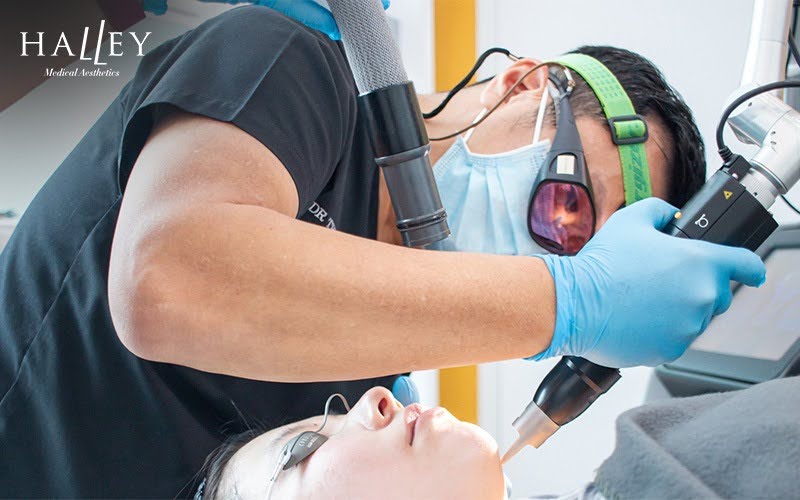
- Pico Laser treatment: Delivers ultra-short picosecond pulses that create a photoacoustic effect, shattering pigmentation and stimulating collagen production with minimal heat damage to surrounding tissues. These smaller fragments are then gradually cleared through the body’s lymphatic system.
- Intense Pulsed Light (IPL): Emits broad-spectrum light that is absorbed by melanin in the skin, converting light into heat to break down pigmented cells, helping to reduce visible pigmentation over time
Treatment options for melasma
Melasma tends to be more stubborn and requires a controlled approach. Common melasma treatment options include:- Pico Laser: May also be used for melasma to gradually and evenly disperses pigmentation. Treatments must be carefully managed by an experienced doctor to reduce the risk of rebound pigmentation which is the the recurrence or worsening of pigmentation after an initially effective treatment or improvement.
- Microneedling with RF: Combines radiofrequency (RF) energy with microneedling to create micro-injuries in the skin, triggering the body’s natural healing response and stimulating collagen and elastin production. It supports overall skin quality and can be considered as part of a broader treatment plan for melasma.
- Topical skin products: Medical-grade creams or serums containing pigment-regulating ingredients such as tranexamic acid or retinoids can help reduce melanin production and support maintenance.
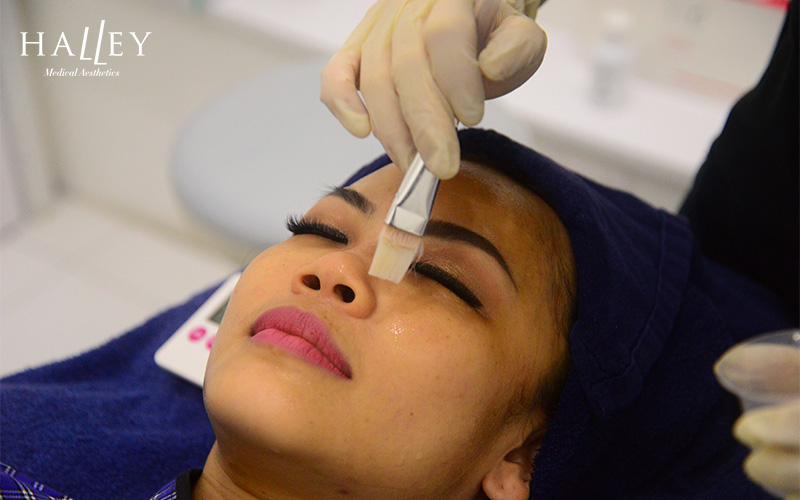
Our no-downtime chemical peels formulated with lactic acid, glutathione, and glycolic acid may be considered for both freckles and melasma. These peels are designed to support cell turnover and luminosity while remaining suitable for pigment-prone skin.
General tips for pigmentation prevention and everyday care
However, preventing dark spots doesn’t just end with treatment. Consistent daily skincare habits are crucial for long-term results, helping regulate melanin activity and protect the skin from repeated triggers.
- Apply a broad-spectrum sunscreen with SPF 50 or higher every day, including on cloudy days or when indoors.
- Use physical sun protection such as hats, umbrellas, or shaded walkways to reduce cumulative sun and heat exposure.
- Avoid harsh exfoliation and overly aggressive treatments, which may irritate the skin and worsen discolouration, particularly for those prone to melasma.
- Maintain a gentle skincare routine that includes antioxidants and well-formulated brightening ingredients to support hydration and skin barrier health.
- Schedule regular reviews with your doctor to track changes, refine your routine, and adjust treatment plans as your skin’s needs evolve.
Conclusion: Knowing your skin, choosing thoughtfully
Understanding the differences between freckles vs melasma enables you to make informed decisions rather than relying on guesswork. Pigmentation is complex, and what works for one person may not be suitable for another. A thoughtful approach focuses on understanding triggers, respecting skin behaviour, and choosing skin care strategies that support long-term skin health.
At Halley Medical Aesthetics, we prioritise careful assessment and personalised planning. Our doctors will undergo a detailed consultation with you to determine which treatments, including laser for pigmentation, Intense Pulsed Light treatment, microneedling with RF, and chemical peels, best suit your needs. Contact us today to explore your options.
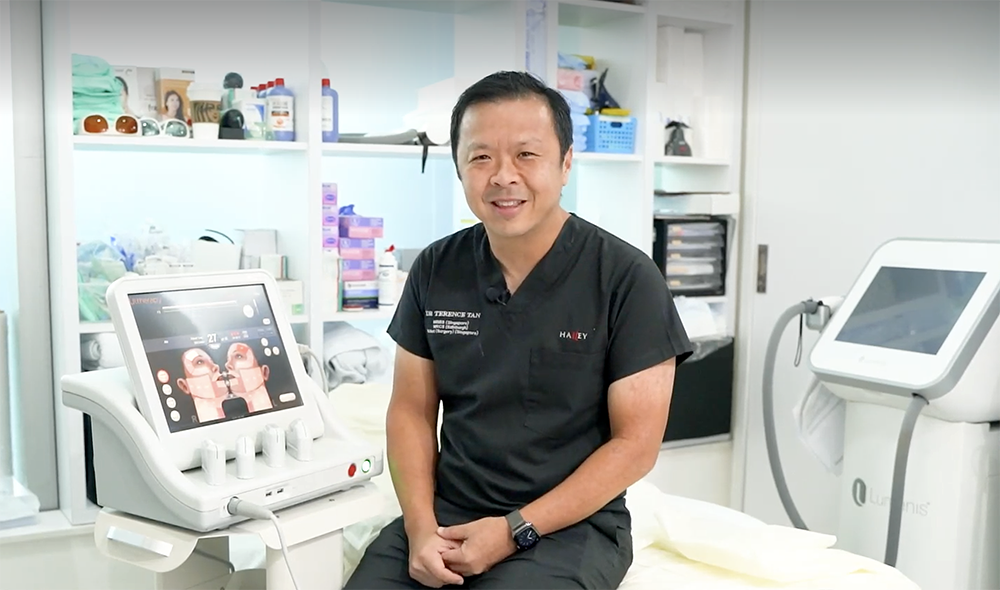
Dr. Terence Tan
MBBS (Singapore), MRCS (Edinburgh), M.Med (Surgery) (Singapore)
“Many people start to worry when they notice fine lines or sagging skin, but in most cases, these are just normal changes that happen gradually. The key is not to rush into fixing everything, but to understand what your skin needs at that point. With the right mix of daily care and appropriate treatments, we can tighten and lift saggy skin in a safe and natural-looking way.”


