
Key takeaways
- Spider veins on the face are common, small dilated vessels that often appear due to genetics, UV exposure, temperature changes, hormones, or skin conditions.
- They are usually harmless but may become more visible without treatment.
- Laser therapy, including long-pulsed lasers, remains a widely used treatment option for facial veins.
- Doctors will conduct a personalised assessment to help determine the most suitable laser vein removal technique for your skin.
Key takeaways
- Spider veins on the face are common, small dilated vessels that often appear due to genetics, UV exposure, temperature changes, hormones, or skin conditions.
- They are usually harmless but may become more visible without treatment.
- Laser therapy, including long-pulsed lasers, remains a widely used treatment option for facial veins.
- Doctors will conduct a personalised assessment to help determine the most suitable laser vein removal technique for your skin.
Facial redness can be easy to brush off at first, but the moment visible lines start to form, it is natural to feel concerned. These tiny vessels, also known as spider veins, develop gradually or seem to appear overnight, leaving you wondering how they formed and whether they will worsen. Luckily, there are several treatment options available to minimise their appearance and help you regain your confidence.
What are spider veins?
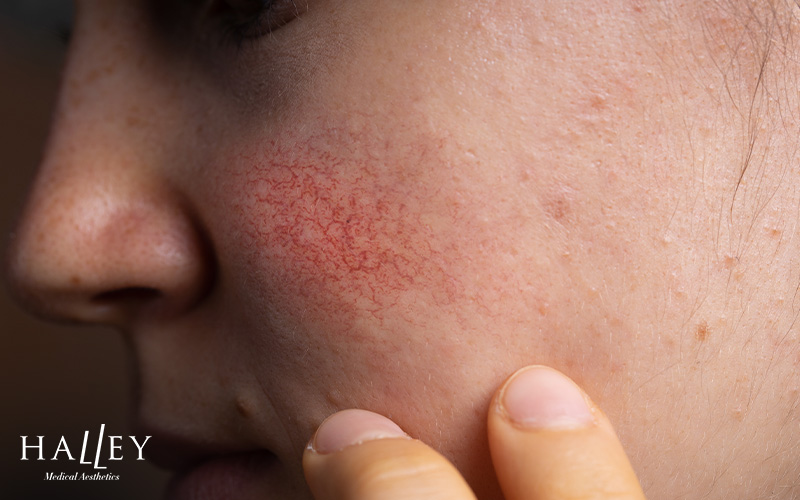
Spider veins are small, dilated blood vessels that sit close to the surface of the skin. They may look red, blue, or purple and often branch out in a web-like pattern. On the face, spider veins tend to appear along the cheeks, nose, and sometimes the chin, where the skin is thinner, and the vessels sit closer to the surface. These vessels become more visible when the capillary walls weaken or when blood flow slows, allowing the veins to widen over time.
Although they do not typically cause discomfort, facial veins can gradually become more noticeable if left untreated.
Causes of spider veins
Spider veins develop on the face for a range of reasons, and often more than one factor is involved. Common causes include:
- Genetics: Some individuals naturally have more fragile capillaries, making them prone to broken capillaries and visible veins.
- Sun exposure: UV light is a major contributor to vascular changes on the face. Prolonged sun exposure weakens collagen, reducing support for blood vessels, making spider veins more noticeable over time.
- Temperature changes: Moving quickly between heat and cold can cause rapid dilation and constriction of facial vessels. Over time, these repeated shifts may weaken the vessel walls.
- Hormonal changes: Life stages such as pregnancy or menopause may influence vascular activity, increasing the likelihood of developing visible facial veins.
Spider veins vs rosacea: How are they different?
Spider veins and rosacea can look similar at first glance, especially when both present as facial redness. In fact, the two often overlap, as spider veins may also develop in people with rosacea. However, there are slight differences that individuals should take note of.
Spider veins appear as individual, thread-like vessels that show up in specific spots. They also tend to remain in defined locations and are generally stable, although their visibility may vary slightly with factors such as temperature or circulation.
Rosacea, on the other hand, affects broader areas of the face and is often associated with flushing, warmth, or sensitivity. Instead of isolated lines, the redness appears more diffused, and symptoms may worsen with sunlight, heat, exercise, or certain foods.
Treatment plans for these two conditions vary. For instance, spider veins may respond well to targeted laser vein removal, while rosacea often requires a broader approach and ongoing management to support vascular stability and reduce flare-ups. A consultation with a doctor can help determine which condition is contributing to the redness and what type of treatment may be suitable.
Can spider veins go away on their own?
In most cases, visible facial veins do not fully disappear without targeted treatment. Once a vessel has widened enough to be seen on the skin’s surface, the structural change within the vessel wall tends to remain.
That said, some fluctuations are common. For example, spider veins on the face may appear more noticeable after heat exposure or alcohol intake, then look slightly lighter the next day. However, these changes are temporary and do not indicate that the veins have decreased in size.
How laser treatments work for facial spider veins
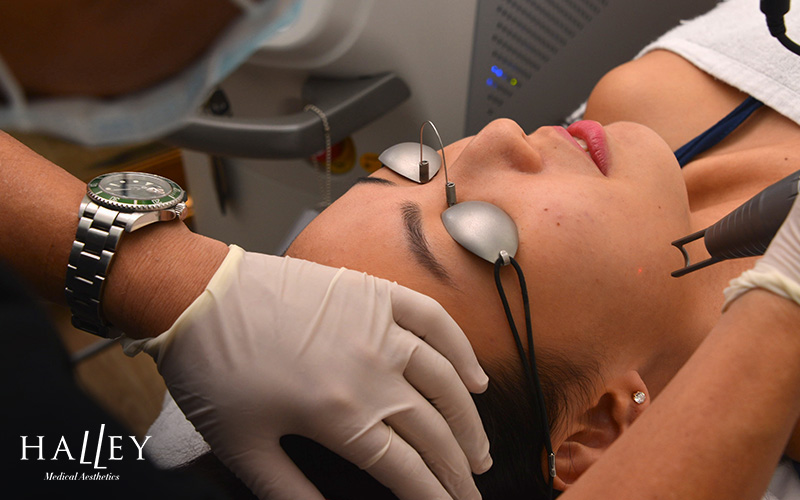
At Halley Medical Aesthetics, laser therapy is one option available to improve the appearance of facial veins. Different laser machines may be used depending on the characteristics of the vessels. These include the Long-pulsed Nd:YAG Laser (1064nm and 2940nm) as well as a Dual Wavelength 755nm and 1064nm Laser, which together provide a combination of three wavelengths to target vessels at varying depths.
This range of wavelengths allows for greater flexibility in treatment. With access to three laser wavelengths across two machines, doctors can customise treatment based on the size, depth, and colour of the visible veins. It also supports treatment across a wider range of skin tones, as longer wavelengths, such as 1064 nm, are generally more suitable for darker skin tones.
Here is how it works:
- The laser energy is absorbed by haemoglobin in the targeted vessel.
- Controlled heat is generated, which causes the vessel walls to collapse.
- Over time, the body reabsorbs the vessel, allowing it to fade gradually.
This laser treatment for spider veins is typically performed with a cooling device, such as chilled air or a cooled applicator, to support comfort and protect surrounding skin. Most sessions take about 15 to 30 minutes, depending on the number of visible vessels being treated. Recovery is generally minimal, and individuals can often continue with their daily routine shortly after treatment.
Since each person’s skin and vascular pattern is unique, the doctor will assess whether laser treatments are suitable based on the depth, colour, and size of the visible veins.
Taking control of facial redness with Halley Medical Aesthetics
Spider veins may be harmless, but their appearance can affect your confidence in day-to-day life. Understanding the available treatment options can help you make thoughtful decisions about your skin health.
At Halley Medical Aesthetics, we tailor treatment plans to each person’s unique skin condition and comfort level. Our team uses evidence-based technologies such as the Long-pulsed Nd:YAG Laser and Dual Wavelength Laser to address visible vessels while supporting overall skin resilience. Get in touch today to find out more about the services we offer.
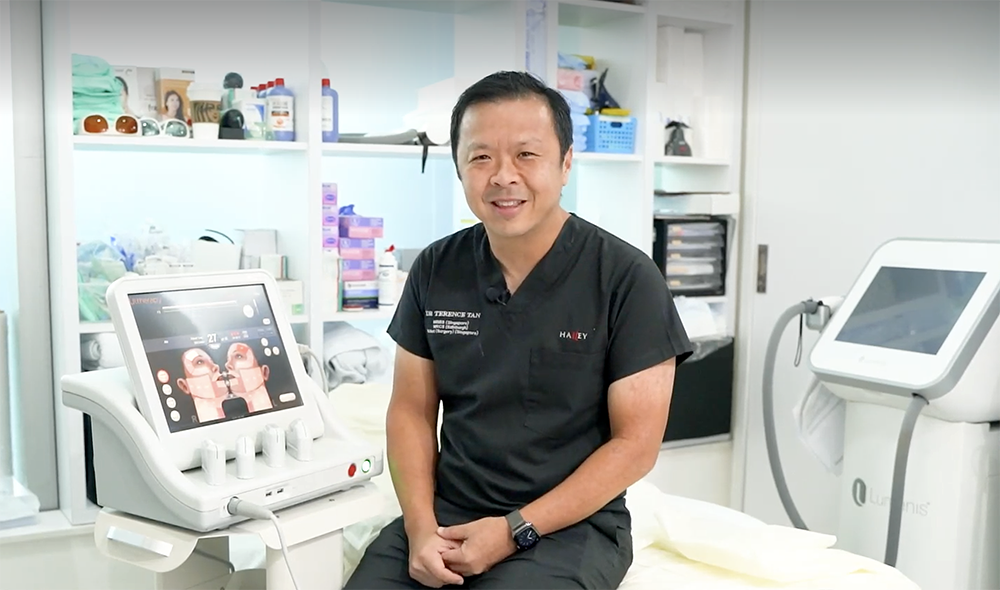
Dr. Terence Tan
MBBS (Singapore), MRCS (Edinburgh), M.Med (Surgery) (Singapore)
“Many people start to worry when they notice fine lines or sagging skin, but in most cases, these are just normal changes that happen gradually. The key is not to rush into fixing everything, but to understand what your skin needs at that point. With the right mix of daily care and appropriate treatments, we can tighten and lift saggy skin in a safe and natural-looking way.”


