
Skin ageing is a gradual process that often begins earlier than many expect. Your skin may start to feel less firm, take longer to bounce back after movement, or show fine lines even when your face is at rest. This is often related to natural changes in skin elasticity, which affects how well the skin maintains its structure over time.
This process is a normal part of ageing, but it is not entirely out of one’s control. Daily habits, sun exposure, stress, and skincare choices can all influence how quickly these changes become noticeable. In this article, we break down what affects skin elasticity, how to recognise early signs of ageing, and which approaches may help support skin firmness over time.
Key takeaways
- Skin elasticity changes gradually, often beginning earlier than expected, and is influenced by factors such as ageing, sun exposure, lifestyle habits, and skincare consistency.
- Early signs include reduced firmness, slower bounce-back, fine lines at rest, or subtle sagging in areas like the cheeks, jawline, neck, and eye area.
- Daily habits matter. Balanced nutrition, adequate hydration, sun protection, and a consistent skincare routine can help support the skin’s structure over time.
- Professional treatments like energy-based skin-lifting therapies, lasers, and skin boosters, can provide additional support by stimulating collagen and elastin production and improving hydration within the deeper skin layers.
- There is no single solution for everyone. Understanding your skin condition and setting realistic expectations helps guide choices aligned with your personal goals.
Understanding the science behind skin elasticity
Elasticity refers to the skin’s ability to stretch during facial expressions and return to its original position. This is not affected by a singular factor but depends on several key components within the dermis, the deeper layer of the skin that provides structure.1. Collagen
Collagen acts like the skin’s internal framework. It helps keep the skin firm and supported, allowing it to hold its shape against gravity and everyday movement. When collagen levels are healthy, the skin appears firm and resilient. Declining collagen levels, however, can lead to a loss of skin firmness while also intensifying fine lines and sagging over time.2. Elastin
Elastin is what gives the skin its flexibility, allowing the skin to stretch during facial expressions before returning to its resting position. Unlike collagen, elastin is produced earlier in life and has limited capacity for regeneration. Once elastin fibres are damaged by ageing or environmental exposure, it will take a longer time for the skin to “bounce back” into shape, resulting in sagging skin.3. Hyaluronic acid and hydration
Hyaluronic acid (HA) is a naturally occurring molecule that helps the skin retain moisture by binding water within the dermis. Adequate hydration helps maintain the skin’s plumpness while supporting both collagen and elastin. When hydration levels drop, the skin will appear less voluminous and less supple, causing fine lines and wrinkles to appear.4. Cellular turnover and repair
The efficiency of the skin’s repair and renewal processes also affects skin elasticity. Regular cell turnover replaces older, weaker surface cells with newer ones, helping to maintain smoothness and a healthy skin barrier. As cell turnover slows with age, it takes longer for cells to regenerate and replace damaged ones. This can affect our skin’s texture and its ability to recover from daily stress.Common causes of elasticity loss
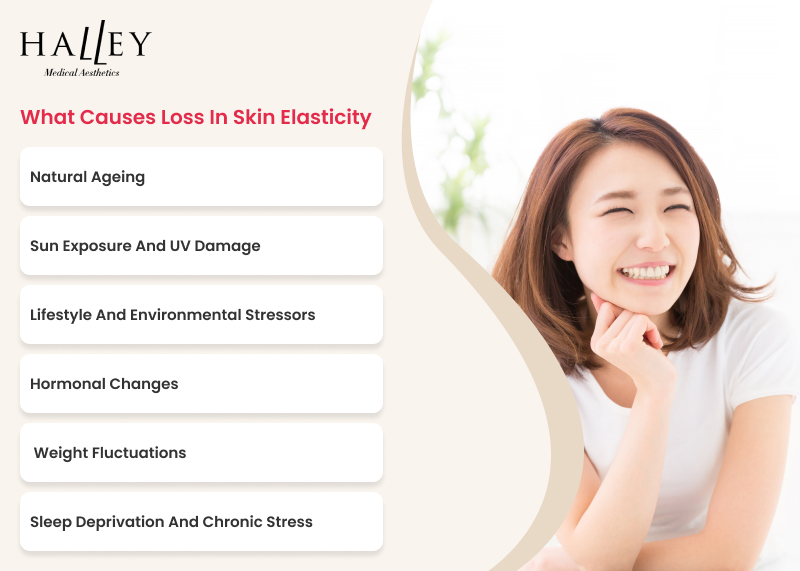
Generally, a combination of internal biological changes and external stressors can affect skin elasticity.
1. Natural ageing
Collagen production begins to slow down gradually from your mid-20s onwards, at an estimated rate of around 1% per year. At the same time, the collagen network fibres, which are normally tightly aligned, become thinner, fragmented, and less organised. The skin’s repair mechanisms also slow down, which slows down the skin repair process. These changes can contribute to the gradual thinning of the dermis and reduced structural support.
2. Sun exposure and ultraviolet (UV) damage
UV radiation is a major contributor to premature ageing and loss of skin elasticity. Prolonged UV exposure breaks down collagen and elastin fibres and generates free radicals that disrupt normal skin repair processes. This process, known as photoageing, accelerates the development of wrinkles and skin laxity, particularly in areas frequently exposed to the sun, such as the face, neck, and hands.
3. Lifestyle factors and environmental stressors
Everyday habits can place an ongoing strain on the skin.
- Smoking reduces blood flow to the skin and affects oxygen and nutrient delivery, impairing collagen synthesis.
- Excessive alcohol intake can dehydrate the skin and disrupt repair processes.
- Poor dietary habits limit the availability of essential nutrients needed for tissue renewal.
Additionally, environmental pollution can further contribute to oxidative stress, placing additional strain on the skin’s structural systems.
4. Hormonal changes
Hormones play a key role in maintaining skin thickness and density. Oestrogen, in particular, supports collagen production and hydration. During periods of hormonal fluctuation, such as menopause, the decline in oestrogen levels can accelerate loss of firmness and reduce the skin’s ability to retain moisture, making changes in skin elasticity more noticeable.
5. Extreme weight fluctuations
Significant stretching of the skin due to drastic weight changes can strain collagen and elastin fibres. When the skin is stretched beyond its capacity and does not have sufficient time or resources to recover, it may lose its ability to retract fully, leading to persistent looseness.
6. Sleep deprivation and chronic stress
Adequate rest supports the body’s ability to recover and repair. When our bodies get insufficient sleep, the skin’s natural repair process slows down, increasing daily cellular damage. Chronic stress can further raise cortisol levels, potentially affecting collagen production and causing inflammation within the skin, reducing skin elasticity over time.
Early signs and areas commonly affected by reduced skin elasticity

Changes in skin elasticity tend to develop slowly and may not be obvious at first. Paying attention to these early signs can help you decide when to adjust your skincare habits or seek professional advice.
1. Changes in texture
You may notice that your skin feels slightly thinner, less smooth, or not as soft as it used to be. Fine lines may become visible even when your face is relaxed, which can reflect reduced structural support beneath the skin’s surface.
2. Reduced “bounce-back”
Some people observe that their skin no longer settles as quickly after being touched or moved. For example, when gently pinched, the skin may take slightly longer to return to its original position. This can be an early sign of reduced elasticity and is often noticed before visible sagging appears.
3. Sagging or drooping
Skin in the cheeks, jawline, and neck may start to sag or droop. These regions rely heavily on underlying structural support, so saggy skin can become more apparent over time as the skin’s structure weakens.
4. Fine lines around high-movement areas
The skin around the eyes and mouth tends to show changes earlier. This is partly because the skin in these areas is thinner and moves frequently with expressions, making it more sensitive to gradual changes in skin elasticity.
5. Dryness and dullness
Skin may start to look less hydrated or feel less comfortable. Reduced moisture levels and slower skin renewal can make the skin appear tired and cause fine lines to stand out more easily.
In addition to the face, similar changes are commonly noticed on the neck, décolletage (neckline), hands, and arms. These areas often have thinner skin and may receive less consistent sun protection, which can make signs of ageing and elasticity loss more noticeable over time.
Lifestyle habits that help support skin elasticity and firmness
While lifestyle changes alone cannot reverse skin that is already sagging, they can help slow further decline and support overall skin health.
1. Eat for your skin
Think of your diet as part of your skincare. Eat more foods that include antioxidants, vitamins, and healthy fats, like monounsaturated and polyunsaturated fats, as these nutrients can help protect the skin from everyday oxidative stress. Foods rich in vitamin C, such as oranges, kiwis, and strawberries, can also help support collagen synthesis. Omega-3 fatty acid sources like salmon, sardines, and walnuts can also play a key role in maintaining the skin barrier. However, moderation is key; all fats are high in calories, even if they are “healthier”.
2. Keep your skin well hydrated
Hydration affects how supple and comfortable your skin feels. Drinking enough water supports circulation and good skin. Pair this with topical hydration by moisturising regularly, usually once in the morning and once at night, using ingredients such as HA, peptides, or glycerin. This will help the skin retain moisture, stay flexible, and better tolerate daily environmental exposure.
3. Make sun protection a daily habit
Apply sunscreen daily to help protect collagen and elastin from UV-related breakdown, even on cloudy days. A broad-spectrum SPF 50 or higher is a practical baseline. Using antioxidants such as vitamin E or niacinamide alongside sunscreen can also provide additional support against environmental stress.
4. Be mindful of habits that weaken skin structure
Certain lifestyle habits place extra strain on the skin over time. Smoking limits oxygen delivery, excessive alcohol intake dehydrates our skin, and frequent crash dieting deprives the skin of essential nutrients. Reducing these habits helps support collagen integrity and slow skin elasticity loss.
5. Keep your skincare routine simple and consistent
A routine that you can maintain over time is often more helpful than one that changes frequently. Ingredients such as retinoids, peptides, and antioxidants support skin renewal and structural maintenance when used appropriately. Gentle exfoliation can also help by removing surface build-up, allowing your skin to fully absorb active ingredients in skincare.
Professional tightening treatments that boost skin elasticity
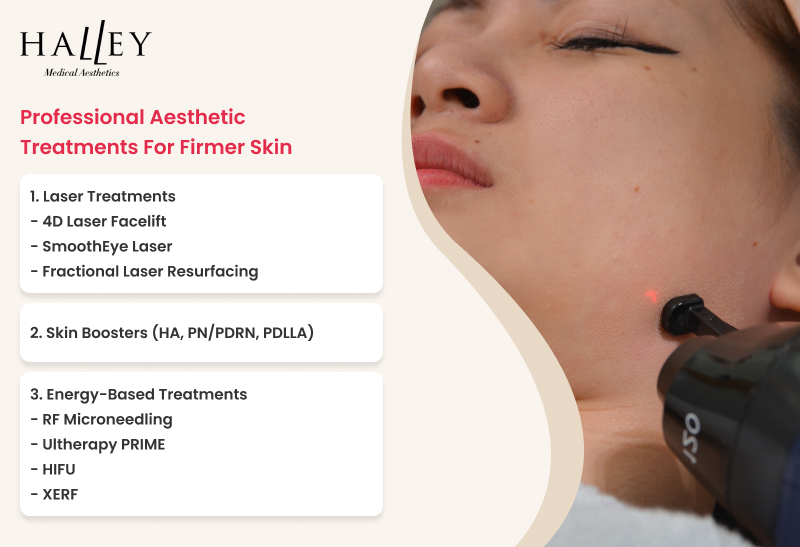
When skincare and lifestyle measures are no longer sufficient, professional skin-tightening treatments can help support deeper structural renewal within the skin.
Energy-based treatments: Non-surgical skin tightening
1. Ultherapy PRIME for non-surgical lifting
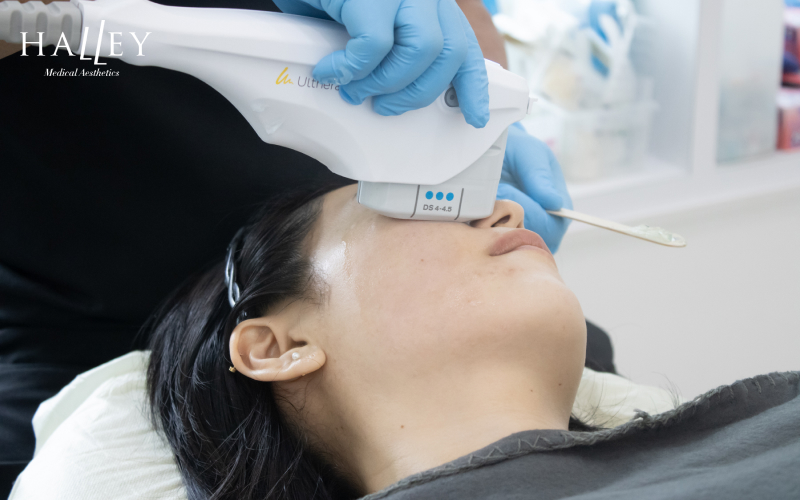
Ultherapy PRIME is a skin tightening treatment approved by the US Food and Drug Administration (US FDA) that uses micro-focused ultrasound energy to deliver energy at specific depths of 1.5mm, 3.0mm, and 4.5mm, targeting the Superficial Musculoaponeurotic System (SMAS) layer responsible for structural support. Doctors also use real-time imaging to see the skin layers during treatment and deliver energy where needed. This process supports more controlled and targeted lifting compared to other ultrasound-based treatments. It is commonly used for areas such as the brows, cheeks, jawline, neck, and decolletage where skin may begin to soften and sag over time.
2. XERF for face and neck firming
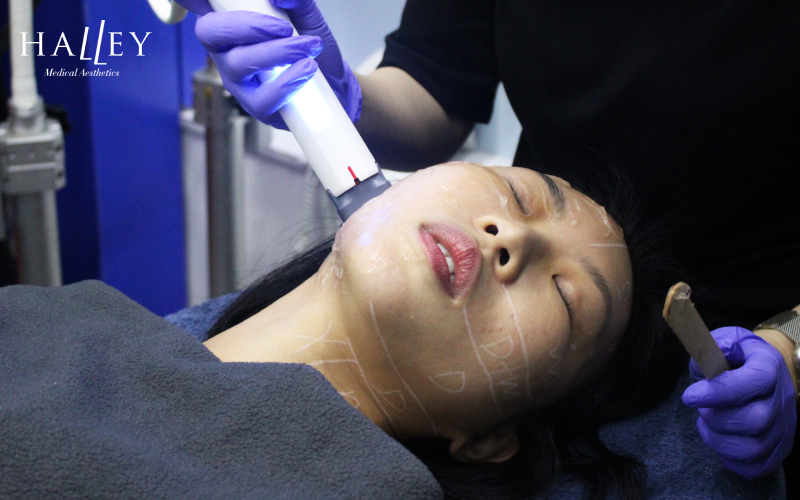
XERF is a US FDA-approved skin tightening treatment that uses dual monopolar radiofrequency (RF) energy to deliver controlled thermal energy into three levels of the dermis and target the SMAS layer for structural support. This triggers the skin’s natural healing response and stimulates collagen production, which helps improve skin density over time. With its ability to distribute energy more evenly across multiple depths, it supports more consistent skin tightening throughout the face and neck, including the cheeks, jawline, and lower face.
3. Exilis Ultra 360 for Skin Tightening and Contouring
Exilis Ultra 360 combines RF and ultrasound technology to heat the deeper layers of the skin in a controlled manner. This treatment supports collagen and elastin production and skin tightening with no downtime. Common treatment areas include the forehead, eye area, cheeks, jawline, and neck.
4. HIFU (High-Intensity Focused Ultrasound) for skin contouring and tone
HIFU delivers ultrasound energy to the deeper dermal and SMAS layers, which are important for structural support. The heat generated triggers natural collagen regeneration, helping improve skin firmness and contour over time.
5. Microneedling with RF for firming and texture refinement
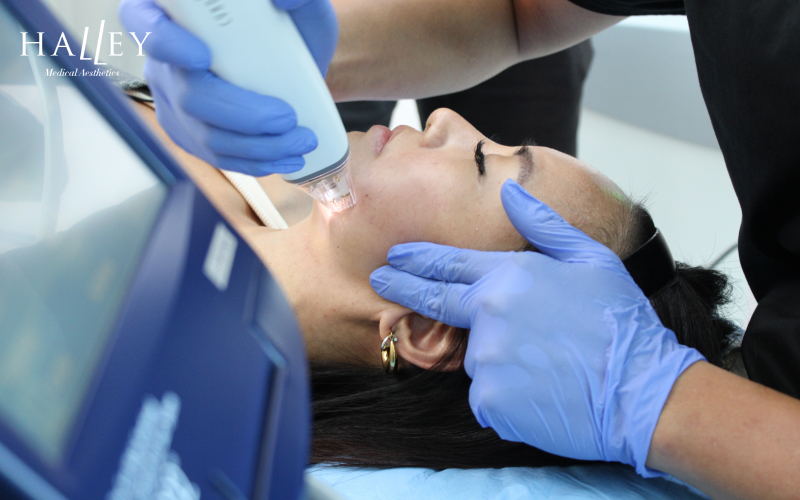
Microneedling with RF combines fine needles with RF energy to work beneath the skin surface, stimulating collagen production and dermal remodelling. This supports gradual improvements in skin firmness and texture. Microneedling with RF is often considered when concerns include mild laxity, uneven texture, or enlarged pores.
Laser treatments: Tightening and collagen renewal
Laser treatments deliver controlled thermal energy into specific layers of the skin. This process encourages collagen remodelling and elastin regeneration as part of the skin’s natural repair response, gradually enhancing firmness and texture.
1. 4D Laser Facelift
4D laser facelift uses a combination of Er:YAG and Nd:YAG wavelengths to target multiple layers of the skin. By targeting both surface and deeper structures, it supports gradual skin tightening and improvement in areas such as the jawline and midface. Over time, this approach also helps improve overall skin tone and texture.
2. SmoothEye Laser
This eyelid laser treatment uses Er:YAG technology to support tightening of loose skin and softening of fine lines around the eyes. By also targeting the inner mucosal layer of the lower eyelid, it helps stimulate collagen remodelling and strengthen skin elasticity in the under-eye area. Over time, this may lead to gradual improvements in the appearance of fine lines, skin laxity, and overall skin quality without the use of injections or surgery.
3. Fractional laser resurfacing (CO2 and Erbium)
Fractional laser skin resurfacing treatments using either CO2 or Erbium technology create controlled microscopic treatment zones in the skin, triggering the skin’s natural healing response. This encourages new collagen formation in treated areas. Over time, this process can help improve skin elasticity, skin firmness, refine overall texture, and reduce the appearance of fine lines and enlarged pores.
Skin boosters: Hydrate, repair, and stimulate collagen production
- Skin boosters deliver hydrating or regenerative ingredients into deeper skin layers, which can help improve skin quality and elasticity from within.
- Hyaluronic acid (HA) skin boosters: HA skin boosters work by delivering stabilised hyaluronic acid into the deeper layers of the skin, where it supports hydration from within rather than sitting only on the surface.
- PN/PDRN skin boosters: PN (polynucleotides) and PDRN (polydeoxyribonucleotides) are derived from DNA fragments and focus primarily on skin repair and recovery. They support tissue repair, improve skin elasticity, and help reduce inflammation.
- Poly-D,L-Lactic Acid (PDLLA) skin boosters: PDLLA works as a biostimulatory agent, gradually encouraging the skin to produce more collagen over time. These injectable treatments can help gradually enhance skin firmness and density.
- Korean ECM skin boosters: These boosters contain Extracellular Matrix (ECM) components. By delivering these elements directly into the skin, this treatment helps restore skin elasticity and address fine lines, especially in fragile or thinning skin.
- HA CaHA amino acid skin boosters: Formulated with HA, calcium hydroxyapatite (CaHA), and amino acids, this skin booster provides hydration and biostimulation to help improve skin firmness and quality.
- HA amino acid skin boosters: This type of skin booster combines HA with a blend of amino acids to support the skin’s natural collagen production processes. It is commonly used to improve skin texture, elasticity, and hydration, particularly in areas showing early signs of ageing.
Frequently Asked Questions
1. When is a good time to start treatments to improve skin elasticity?
There is no single “right” age to start. Some people begin preventive care in their late 20s or early 30s, when natural collagen production starts to slow, while others only explore options later when changes become more noticeable. Starting earlier can help support skin firmness gradually, but treatment decisions are usually guided by skin condition and personal goals rather than age alone.
2. Is it possible to combine different treatments in one session?
In some cases, yes. Some treatments that support skin elasticity can be combined to address different concerns at the same time, such as firmness, hydration, or texture. For example, Ultherapy PRIME may be paired with lasers and skin boosters or XERF as post-treatment maintenance. A consultation is recommended to assess your skin condition and determine whether a combined approach is suitable.
3. How can results be maintained after professional skin elasticity treatments?
Maintaining results often comes down to consistency. Daily sun protection, a well-chosen skincare routine, good hydration, and balanced nutrition all help support collagen health. Some people also choose regular maintenance treatments, often spaced at a duration prescribed by the doctor depending on the treatment, to help sustain gradual lifting and firming effects over time.
Conclusion
Changes in skin elasticity tend to happen gradually, and for many people, they become noticeable through small shifts in how the skin feels or responds. While these changes are a normal part of ageing, they are shaped by everyday habits, sun exposure, and overall lifestyle choices.
Although it is not possible to stop ageing entirely, a thoughtful combination of consistent skincare and medical aesthetic treatments can help support skin resilience and flexibility over time. If you are unsure where to start, visit Halley Medical Aesthetics for a consultation. Our team takes a personalised approach, focusing on understanding your skin condition and discussing options that suit your goals, comfort level, and lifestyle.
Book an appointment today.
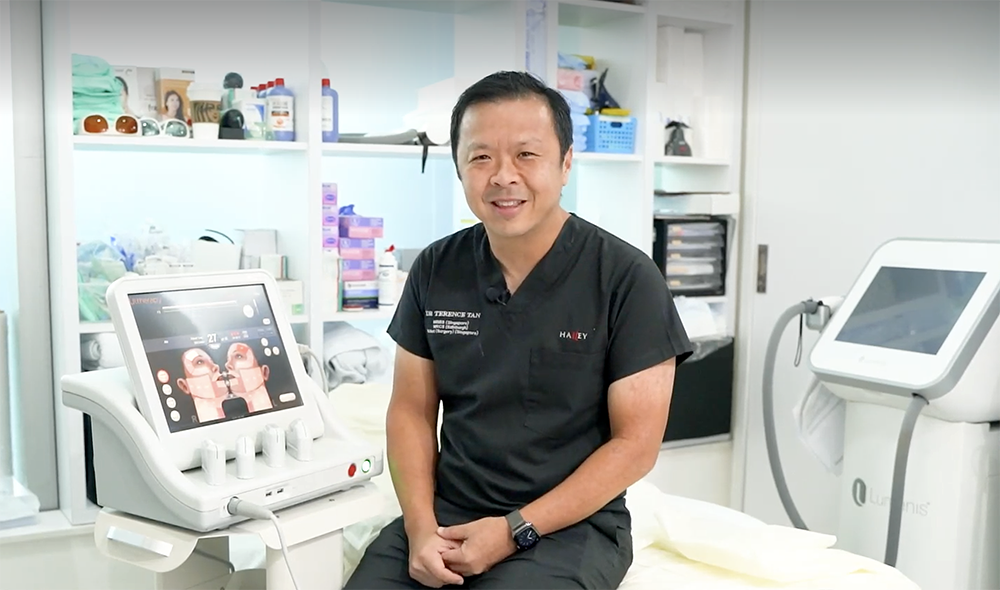
Dr. Terence Tan
MBBS (Singapore), MRCS (Edinburgh), M.Med (Surgery) (Singapore)
“Many people start to worry when they notice fine lines or sagging skin, but in most cases, these are just normal changes that happen gradually. The key is not to rush into fixing everything, but to understand what your skin needs at that point. With the right mix of daily care and appropriate treatments, we can tighten and lift saggy skin in a safe and natural-looking way.”


