In accordance with HSA regulations, we are not permitted to publish the brand names of certain products, such as botulinum toxins, dermal fillers, lasers, and other energy-based aesthetic devices. If you would like to learn more about the treatments and technologies we use, please get in touch with us. Thank you.

Milia Seeds Removal in Singapore

What are milia seeds?

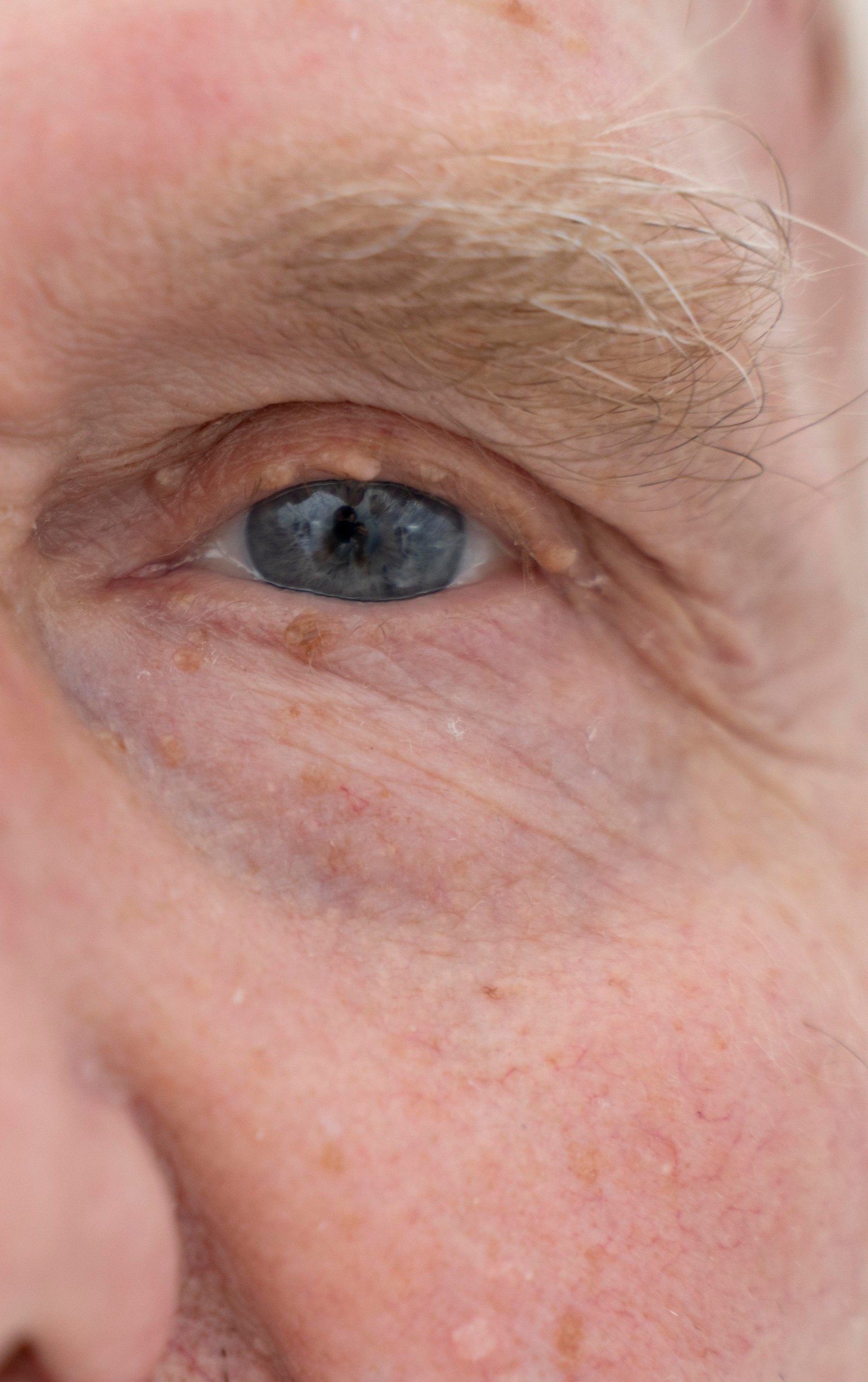
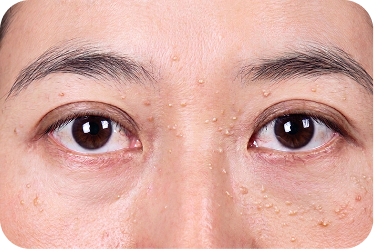
Milia seeds (also referred to as “milk spots”) are small, harmless cysts that form just beneath the surface of the skin. They typically appear as 1–2 mm firm white or yellow bumps and are most commonly found around the eyes, nose, and cheeks.

These bumps are made up of keratin, a protein naturally found in your skin, hair, and nails. Instead of shedding properly, keratin become trapped under the skin, forming these tiny cysts.

Milia are often confused with whiteheads because of their appearance, but they are very different.

Unlike acne:
Milia do not have a pore opening
They cannot be squeezed or popped
They are not caused by oil or bacteria

Milia are common in Singapore and can affect both males and females of all ages, from newborns to adults. While milia seeds are medically harmless, many patients seek milia seed removal because they can make the skin look uneven or textured, especially when they appear in visible areas of the face.

Types of milia seeds

There are different types of milia seeds. Understanding the different types of milia seeds helps determine the most appropriate milia seed treatment.

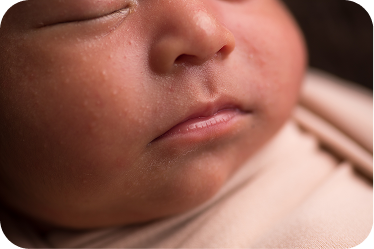
Neonatal milia

Neonatal milia occurs in newborns; small white bumps that usually resolve on their own within a few weeks.
Primary milia

Common in children and adults; forms naturally without a clear cause, often around the eyes and cheeks.
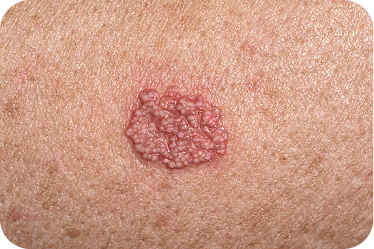
Secondary milia (traumatic milia)

Develops after skin injury, burns, or irritation, including after cosmetic procedures.
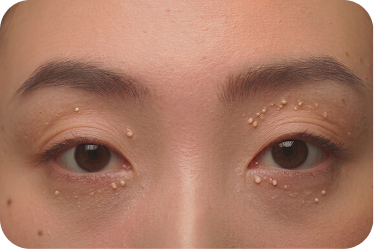
Juvenile milia

Associated with genetic conditions; may appear at birth or develop later alongside other skin issues.
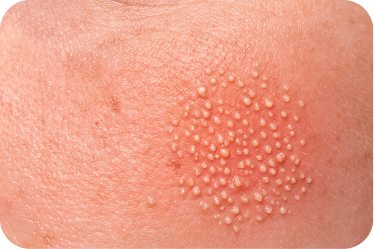
Milia en plaque (MEP)

A rare type where multiple milia cluster on an inflamed, raised patch of skin.
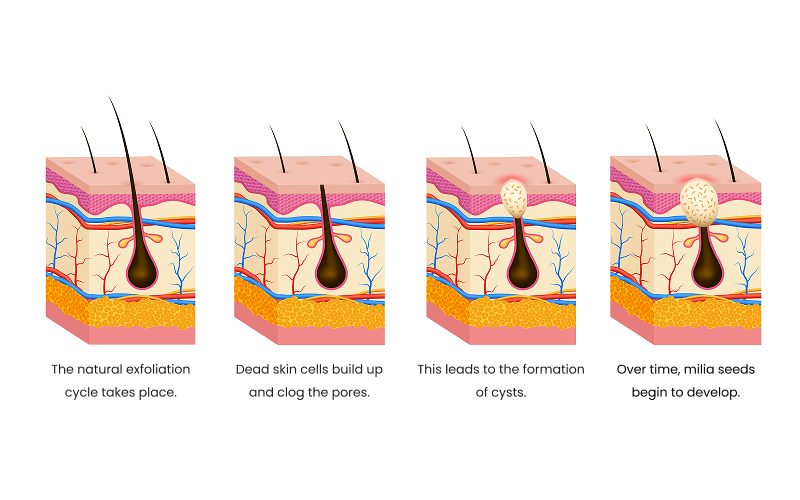
What causes milia seeds?

Milia seeds form when keratin becomes trapped beneath the skin instead of shedding normally, leading to the formation of small, hard cysts.

Natural skin cycle disruption

Dead skin cells shed regularly on healthy skin. When this process slows down, keratin can become trapped under the skin, forming milia.

Build-up of dead skin cells

When dead skin cells accumulate on the skin surface, the likelihood of keratin being trapped is increased.

Heavy or occlusive skincare products

Rich creams, oil-based products, and thick eye creams may contribute to trapped keratin in some individuals, especially in delicate areas like the under eyes.

Sun damage

Chronic sun exposure can thicken the outer layer of the skin, making it harder for dead skin cells to shed naturally.

Skin trauma or injury

Burns, rashes, laser treatments, and other skin injuries can disrupt normal healing, leading to secondary milia formation.

Ageing and slower skin renewal

As we age, cell turnover slows down, increasing the likelihood of keratin becoming trapped beneath the surface.

How to get rid of milia seeds

There are several effective milia seed treatment options available in Singapore, ranging from in-clinic procedures to skincare approaches.

Manual extraction

A doctor will use a sterile needle or lancet to gently open the skin and remove the trapped keratin.

Non-Fractional CO2 laser removal

Non-fractional CO2 laser works by ablating the superficial layer of skin over the milia seed to allow the trapped keratin to be safely removed or vapourised. Doctors are able to treat each milia accurately while minimising trauma to surrounding skin. Due to its ablative capability, it may be suitable for milia located beneath thicker skin or in areas with multiple lesions.

Chemical peels

In-clinic chemical peels use controlled exfoliation to remove the top layer of dead skin cells and comedones. This can help improve skin renewal and reduce the likelihood of keratin becoming trapped beneath the surface. While it is not a direct treatment for treating existing milia, they may help prevent new ones from forming and improve overall skin texture.

Topical retinoids

Topical retinoid increase skin cell turnover and therefore reduces the likelihood of keratin becoming trapped beneath the skin.

Chemical exfoliation (AHA/BHA)

Glycolic acid or salicylic acid help gently exfoliate dead skin cells, which may support prevention and gradual improvement of milia.

Proper skincare routine

Switching to lightweight, non-comedogenic products, especially around the eye area, can help prevent milia seed worsening or recurrence.

What to expect during milia seed removal treatment

Consultation

  • A doctor will assess your skin to confirm that the bumps are milia seeds and not another skin condition.
  • Your skin type, as well as the location, number, and depth of the milia, will be carefully evaluated.
  • The expected results, potential risks, and post-treatment care will also be clearly explained

During the procedure (Non-Fractional CO2 laser milia seed removal)

  • The skin is cleansed thoroughly
  • A numbing cream is applied prior to the treatment to ensure that the treatment is a comfortable one.
  • A Non-Fractional CO2 laser is used to gently ablate the top layer of skin over each milia seed
  • This allows the trapped keratin to be removed or vaporised
  • Each lesion is treated individually, minimising damage to surrounding skin

Post-treatment

  • Mild redness, sensitivity, or slight scabbing may occur for a few days

Post-treatment care

  • Avoid sun exposure for at least seven days after treatment.
  • Avoid exfoliation for at least seven days after treatment.
  • Avoid using AHA, acids, or active skincare ingredients for at least seven days, as the skin may still be healing.
  • Apply any medication prescribed by the doctor as recommended.
  • Do not pick or peel off scabs; allow them to heal and fall off naturally.
  • Use a broad-spectrum UVA/UVB sunscreen with SPF 30 or higher daily.

Most patients experience minimal downtime, with skin healing within a few days to a week.

FAQs about milia seeds

Milia seed removal using CO2 laser is generally well-tolerated with minimal discomfort. Most patients describe the sensation as a slight prick or pressure during extraction or laser treatment. Numbing cream is usually applied prior to treatment for a more comfortable treatment experience.

The cost of milia seed removal in Singapore varies depending on the number of milia seeds and treatment method. Please enquire with our front desk to find out more.

Most patients require one to three sessions of laser treatments for optimal results, depending on the number, size, and depth of the milia. Deeper or more stubborn milia may need additional sessions spaced a few weeks apart.

Side effects are usually mild and temporary, and may include:

  • Redness or slight swelling
  • Minor scabbing or sensitivity
  • Temporary skin irritation

These effects typically resolve within a few days, especially with proper aftercare.

Yes, some milia seeds can resolve naturally over time, especially secondary milia. However, many persist for months or even years, and professional treatment is often the fastest and safest way to remove them.