
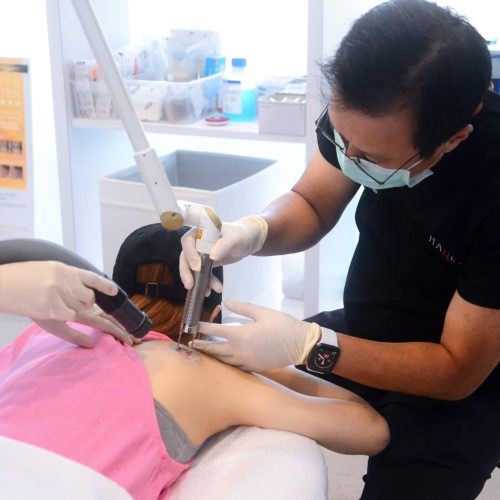
For many individuals, tattoos represent meaningful moments, artistic interests, or milestones in life. Over time, however, personal preferences and circumstances may change. It is not uncommon for individuals to consider tattoo removal because their tastes evolve, their lifestyle changes, or their professional environment requires a different appearance. Others may simply wish to lighten or remove an existing tattoo.
Tattoo removal refers to medical treatments that aim to reduce or break down tattoo pigments in the skin. In certain cases, laser technology may be used to target ink particles beneath the skin, allowing the tattoo to gradually fade over several sessions.
Laser for tattoo removal works by delivering controlled pulses of light energy that tattoo pigments in the skin. This process breaks the ink into smaller particles, which are gradually cleared by the body over time.
During the removal process, specific wavelengths of light are directed at tattoo pigments within the skin. Different wavelengths target different ink colours, which is why multiple laser settings may be used depending on the tattoo’s colours.
After laser treatment to remove tattoo pigments, the fragmented ink particles will be gradually cleared through the body’s immune system. This process occurs over time and contributes to the gradual fading of the tattoo.
Tattoo pigments are usually located at varying depths within the skin. Because only a portion of the pigment can be broken down during each session, several tattoo removal sessions are typically required to achieve gradual fading and removal of the tattoo.
Darker inks, such as black or dark blue, tend to absorb laser energy more readily than lighter colours. Other pigments, such as green or yellow, may respond differently depending on the laser wavelength used.

Laser tattoo removal is the most common and popular method of removing tattoos in Singapore as it is effective. Pico lasers, such as Pico laser Laser and Pico laser (Pico Laser 532/1064 nm), and the Q-Switched Nd:YAG laser are laser machines that can treat a variety of ink colours.
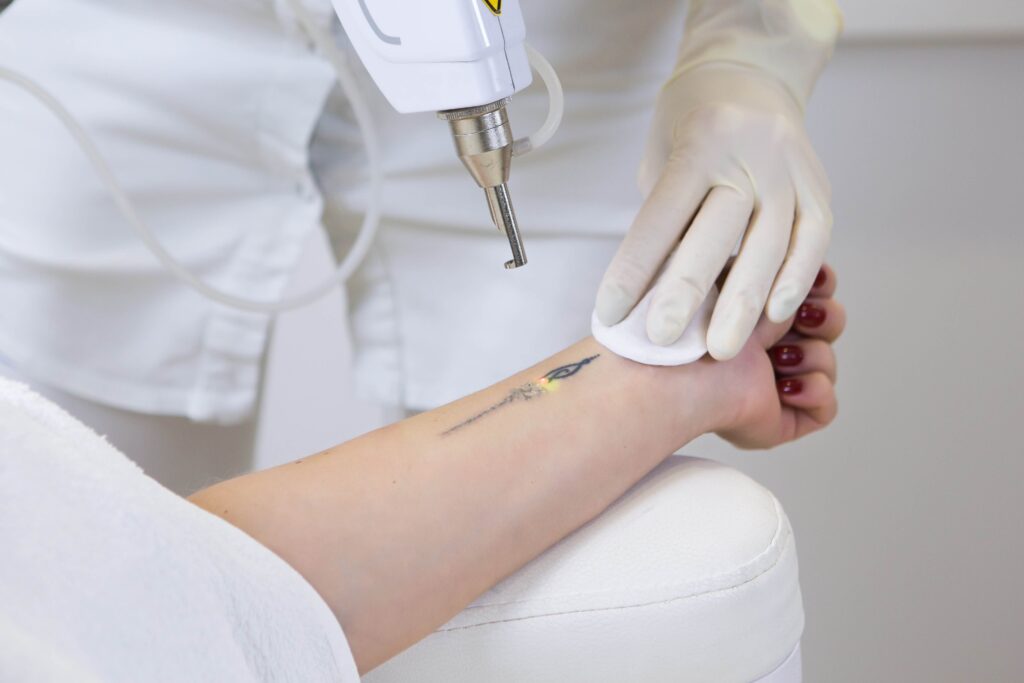
At Halley Medical Aesthetics, our doctors will assess your tattoo and skin during the consultation and determine which laser device or wavelength is appropriate for treatment.
Pico lasers are now commonly used for tattoo removal as pico lasers deliver energy in picoseconds (10⁻¹² s) rather than nanoseconds (10⁻⁹ s). This ultra-short pulse creates a photoacoustic shockwave, rather than mainly heat which is a technology used by lasers traditionally used to remove tattoos in the past. And because of the mechanical effect, pico lasers are able to break tattoo ink pigment into much smaller fragments which are then cleared more easily by macrophages via our body’s lymphatic system. By dispersing the tattoo ink into smaller particles that our body can clear more quickly, pico lasers are able to reduce the total number of sessions required compared to traditional lasers.
Tattoo removal usually occurs gradually because several biological and technical factors influence how tattoo pigments respond to treatment.
Tattoo ink is placed within the deeper layers of the skin. Since pigments may be located at different depths, multiple sessions are often required to progressively target these layers.
Tattoos with heavier ink saturation or larger areas of pigment may require more sessions, as a greater amount of ink needs to be broken down over time.
Different people will respond differently to laser treatment. Factors such as skin type, healing response, and overall skin condition can influence how quickly the tattoo fades.
After the laser energy breaks the tattoo pigment into tiny fragmented particles, the body’s immune system will gradually process and clear the particles out of our body. As this is a biological process which takes time, multiple sessions will be required especially if the tattoo size is better and if many different colours are used in the tattoos.
You have to space your tattoo removal laser treatment sessions so as to allow the your skin time to recover and to allow the body to process fragmented pigment particles. The doctor will recommend an appropriate regular interval between sessions based on how big your tattoo is, the inks used, and how your skin is responding to the treatment.
Your journey begins with a consultation with the doctor. During this session, the doctor will review your medical history and examine the tattoo, including factors such as its size, ink colours, location, and how long it has been present. Based on this assessment, the doctor may advise whether laser tattoo removal is suitable and estimate the number of sessions that may be required.
During each treatment session, laser energy is applied to the tattooed area to target the ink pigments beneath the skin. At Halley, more than one laser machine may be used so that different wavelengths can target different coloured ink particles. A topical numbing cream may be applied before the procedure to help reduce discomfort. Each session typically lasts 15 to 30 minutes depending on the size and complexity of the tattoo being treated.
After the session, the treated area may appear slightly red or sensitive for a short period. The doctor will provide aftercare instructions to support skin recovery, which may include keeping the area clean, avoiding unnecessary irritation, and protecting the skin from sun exposure. Follow-up sessions are usually scheduled with appropriate intervals to allow the skin to recover and the body time to gradually process the fragmented ink particles.

Laser tattoo removal may cause some discomfort, which is often described as a snapping or warm sensation on the skin. The level of discomfort can vary depending on factors such as tattoo location, size, and individual pain tolerance. To help improve comfort during the procedure, a topical numbing cream may be applied before treatment.
The cost of tattoo removal in Singapore varies depending on factors such as the size of the tattoo, the colours used, and the number of sessions required. During your consultation, the doctor will assess your tattoo and provide an estimate of the treatment cost. You may also refer to our price list for an overview of treatment fees.
The number of sessions required for laser treatment varies from person to person. Factors such as tattoo size, ink density, colours used, and the depth of pigment in the skin will influence how the tattoo responds to treatment. In many cases, multiple sessions spaced several weeks apart are needed to allow our skin to heal and our body to pass out the fragmented ink particles.
After laser for tattoo removal, the treated area may appear slightly red, swollen, or sensitive for a short period. Some individuals may also experience temporary blistering, scabbing, or changes in skin pigmentation. Our doctors will provide post-treatment care instructions to help support your skin’s recovery.
Laser tattoo removal can be performed on a range of skin types, but treatment suitability depends on individual factors such as skin tone, tattoo characteristics, and medical history. During the consultation, the doctor will assess your skin and tattoo to determine whether the procedure may be appropriate for you.

The use of these treatments/products is dependent on the clinical assessment and judgement of a medical professional. Please consult a medical doctor for an informed discussion on the use of this treatment/product.