
Do you struggle with small white bumps that linger around your eyes or cheeks, and never seem to disappear? These tiny, pearly bumps are known as milia, and they are a common skin concern that can affect anyone. Even when the rest of your complexion feels smooth and healthy, milia can make the skin appear uneven or textured.
Although harmless, many people find milia stubborn, and home remedies often fall short. Understanding what causes them and the options available for milia seed removal in Singapore is the first step towards managing this condition.
Key takeaways
- Milia are small, harmless cysts that are formed when keratin becomes trapped beneath the skin and commonly appear around the eyes, cheeks, and forehead.
- They can be caused by a variety of factors, such as the use of occlusive skincare, sun exposure, and over-exfoliation.
- Professional options for milia seed removal range from manual extraction to skin resurfacing laser treatments, depending on depth and location.
- Gentle, consistent skincare routines are key to preventing recurrence after milia treatment.
- Consult a qualified doctor to identify the bumps before choosing the right removal approach.
Understanding milia: What’s really behind those tiny bumps?
Before exploring professional milia seed removal, it helps to understand what milia really are and why they form. Knowing the underlying causes can make it easier to choose approaches that support clearer, healthier skin.
What is milia, and why do they form?
Milia are small, dome-shaped cysts made of trapped keratin, which is an important structural protein found in the skin, hair, and nails. Instead of shedding naturally, dead skin cells become enclosed beneath the skin’s surface, forming firm white or yellowish bumps.
Two main types of milia exist:
1. Primary milia: These develop spontaneously, often because the skin’s natural exfoliation cycle slows down. They commonly appear around the eyes and sometimes on the cheek, near the eyes.
2. Secondary milia: These tend to appear after skin trauma or irritation. Common examples include burns, rashes, over-exfoliation, or the use of rich, occlusive skincare products.
Although anyone can develop milia, they are especially common in adults, as cell turnover tends to slow with age.
Common triggers of milia in everyday life
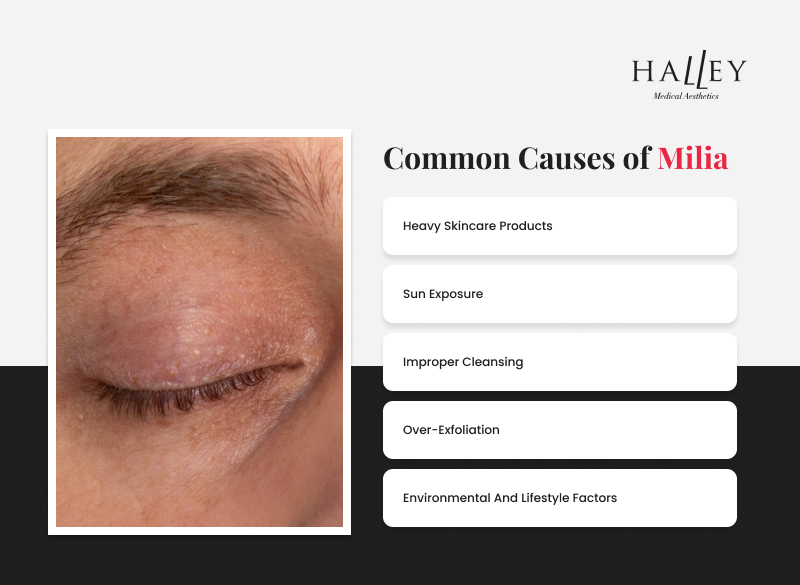
Milia are not caused by bacteria or inflammation, and they are not related to acne. However, several everyday habits can increase the likelihood of milia forming or recurring.
1. Heavy skincare products
Thick moisturisers, balms, or rich sunscreens can form a dense layer over the skin. When these products sit on the skin’s surface and are not absorbed fully, they make it harder for the skin to shed naturally, trapping keratin beneath the surface. This is especially common around the eyes, where people tend to use richer creams.
2. Sun exposure
Chronic ultraviolet (UV) exposure gradually thickens the outer layer of the skin as a protective response. While this is part of the skin’s natural defence, it slows down renewal and limits the effects of exfoliation. This increases the likelihood of deeper, more stubborn milia seeds, making professional removal methods an option many people consider.
3. Improper cleansing
When sunscreen or makeup is not fully removed, residue layers can create a barrier over the skin. This prevents healthy shedding and contributes to buildup. As such, milia tends to form in areas prone to product accumulation, such as the eyelids, nose, and cheeks.
4. Over-exfoliation
While exfoliation supports skin renewal, doing it too often or using abrasive formulas can disrupt the protective barrier. This damage may trigger the formation of secondary milia as the skin tries to heal itself. Harsh scrubs, frequent acid use, or combining multiple exfoliating products often contribute to this issue.
5. Environmental and lifestyle factors
In Singapore’s hot weather and high humidity, increased perspiration can cause sunscreen, sebum, and debris to mix on the skin. This combination, along with infrequent cleansing during busy days, can encourage keratin buildup. Stress, lack of sleep, and inconsistent routines also affect the skin’s repair processes, making milia more likely to form.
Why are some types of milia harder to treat than others?
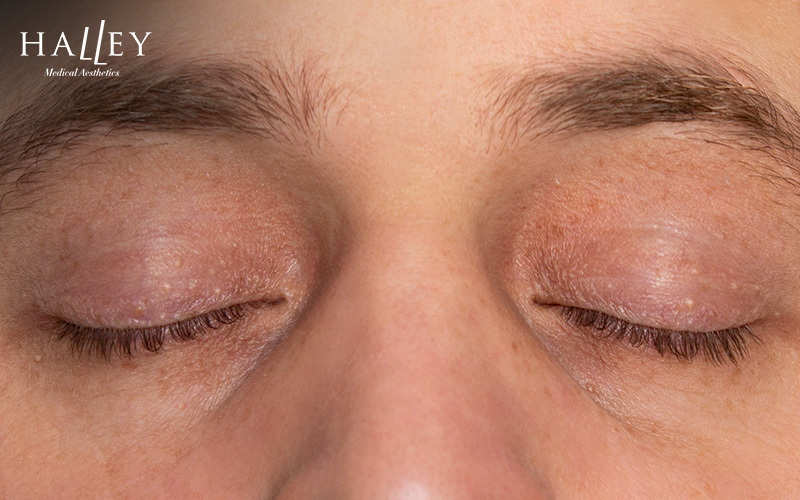
Not all milia behave the same way. Some respond well to simple exfoliation, while others persist for months or years.
Surface vs deeper milia: What are the differences?
Surface-level milia lie close to the epidermis and occasionally respond to mild exfoliating acids. Deeper milia, however, sit beneath several layers of skin and often cannot be treated using topical care alone. These hardened milia seeds often require professional removal methods, such as manual extraction or laser treatments designed to reach deeper layers.
Milia that forms in the delicate eye area
The skin around the eyes is significantly thinner than the rest of the face, making it more sensitive to pressure and trauma. Milia in this region are common but more challenging to remove without causing bruising or small tears. Due to the finesse required, milia extraction around the eyes is best performed by trained professionals familiar with handling delicate skin.
Chronic recurrence
Since milia sit beneath intact skin, they do not have an opening like acne does. Attempting to squeeze, scratch, or lance (poke using a needle) the bump at home often causes more harm than good. This can result in redness, broken skin, scabs, or scarring. Improper pressure can also push the milia seeds deeper into the skin, making removal more difficult in the future.
Underlying skin health
Over time, factors such as ageing, sun damage, or previous inflammation can make the skin thicker or less responsive to exfoliation. When natural cell turnover slows, trapped keratin becomes more common, and home remedies become less suitable. In these situations, many individuals turn to professional milia seed removal options that offer controlled and targeted solutions based on the skin’s condition.
Professional treatments for milia that form on the face
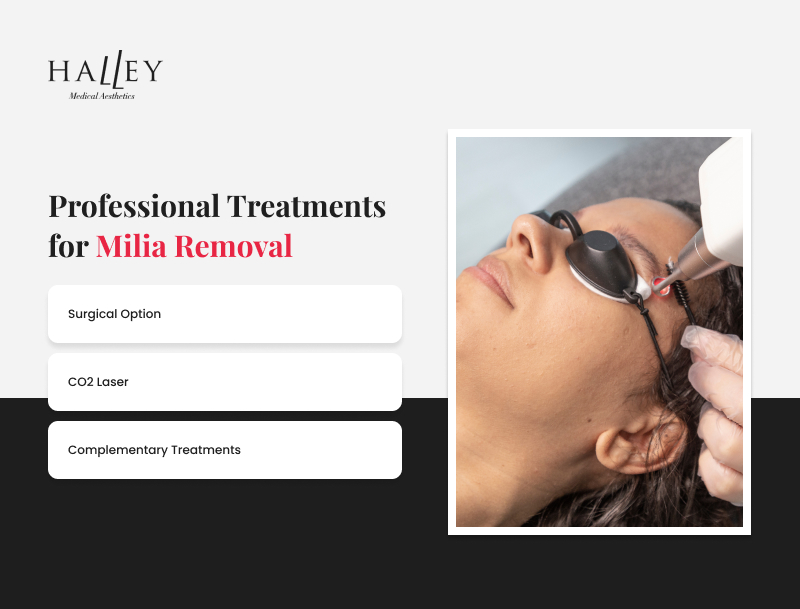
Surgical extraction for surface-level milia
Manual extraction and removal is a straightforward approach for shallow, surface-level milia seeds. During the procedure, a trained professional uses a sterile lancet or needle to create a controlled micro-opening on the skin’s surface. An extractor tool is then used to gently apply pressure, releasing the trapped keratin plug from beneath the skin.
Surgical extraction is often paired with supporting treatments to prevent recurrence.
Laser treatments for milia
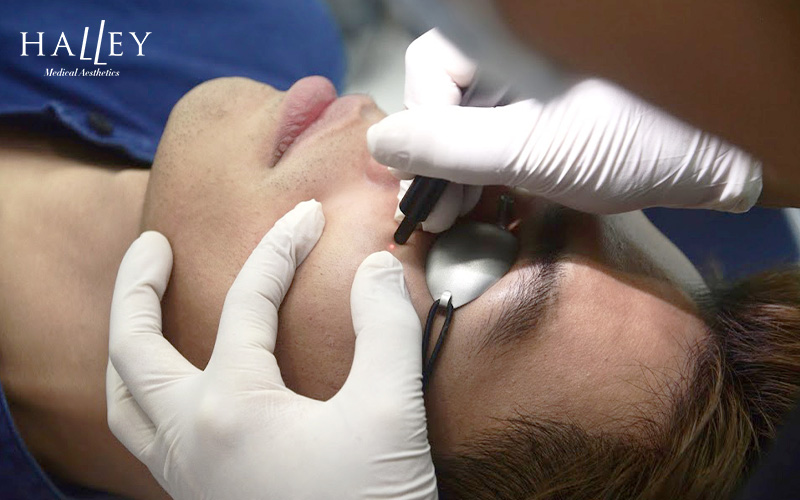
When milia seeds are deeper, more extensive, or recurrent, the CO2 Laser provides a targeted approach to milia removal. This non-fractional laser works by ablating the superficial skin overlying the cyst, allowing the trapped keratin to be removed or vaporised.
When used in this mode, the CO2 Laser enables doctors to target and treat each lesion specifically with minimal trauma to surrounding tissue. Due to its strong ablative capability, it is often recommended for milia located beneath thicker epidermis or in areas with multiple lesions.
It’s important to note that this CO2 Laser differs from Fractional CO2 Laser treatments. Fractional CO2 Laser delivers energy in a pixelated pattern. It is used for skin resurfacing and works by creating microcolumns of controlled thermal injury within the skin while leaving surrounding tissue intact. These microcolumns stimulate skin renewal and collagen remodelling by selectively ablating tiny portions of the epidermis and superficial dermis.
Complementary treatments
Professional milia seed removal treatments can be further supported with additional therapies designed to maintain smoother skin and prevent recurrence.
Chemical peels and masks
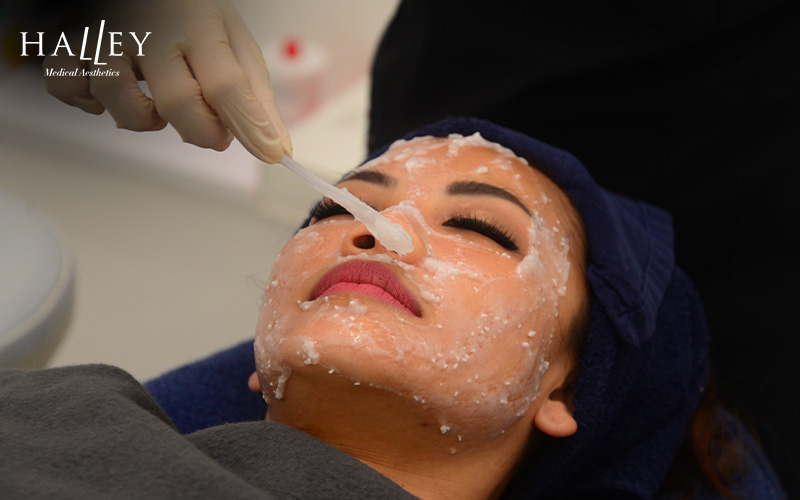
Chemical peels are no-downtime, medical-grade treatments that use controlled peeling to remove the top layer of dead skin cells, surface debris, and comedones. Clearing away this buildup encourages the skin to renew itself at a steadier and more consistent rate, which can help prevent keratin from becoming trapped beneath the surface. Chemical peels also allow newer, smoother skin to emerge over time.
Medical facials for maintenance
Medical-grade facials offer deeper cleansing and gentle maintenance, which can be especially helpful for individuals prone to recurring milia. This also includes treatment facials that focus on deep pore cleansing, such as the Hydrafacial.
During the facial, several techniques and treatments may be used:
- Serums (e.g. Hydrafacial’s Beta-HD serum containing salicylic acid) to soften hardened debris and loosen surface buildup
- Hydration therapies to support skin barrier recovery
- Gentle exfoliation to encourage cell turnover
These facials can complement both laser therapy and milia seed removal, helping prolong results and encouraging clearer, more balanced skin.
A proper diagnosis by a qualified doctor is essential before beginning any treatment. During a consultation, the doctor will assess whether the bumps are indeed milia or another skin condition, such as syringoma or xanthelasma. This evaluation ensures the chosen approach is suitable for your unique skin needs.
Skincare and prevention tips for milia-prone skin
Alongside professional milia seed removal treatments, gentle and consistent skincare habits can help reduce the likelihood of recurrence.
1. Use lightweight, non-comedogenic products
Heavy creams, thick balms, and occlusive formulas can trap keratin beneath the skin, especially around the eyes, where the skin is thinner. Choosing lightweight, water-based moisturisers and non-comedogenic sunscreens allows the skin to breathe more easily. In Singapore’s warm and humid climate, these formulations help prevent buildup while still keeping the skin comfortably hydrated.
2. Incorporate gentle exfoliation
Mild alpha-hydroxy acids (AHAs) or beta-hydroxy acids (BHAs) can help loosen dead skin cells and encourage natural shedding without disrupting the skin barrier. By clearing away surface debris, exfoliation reduces the chances of keratin becoming trapped. For most individuals, exfoliating once or twice a week is sufficient, as more frequent use may irritate the skin and contribute to secondary milia, which are caused by skin injuries or reactions.
3. Introduce retinoids gradually
Retinoids help regulate cell turnover and keep the skin’s renewal cycle moving steadily. However, they should be introduced slowly to minimise irritation, especially for those with sensitive skin. Allow your skin to adapt by starting with a low concentration a few nights a week, and gradually increase usage. Make sure to apply sunscreen daily as well, as retinoids increase sun sensitivity.
4. Use steam to soften the skin before cleansing
Use a facial steamer or a warm towel to soften the surface layer of the skin once in a while. This makes it easier to lift away residue during cleansing without the need for harsh scrubbing. Softening the skin beforehand can be particularly useful for milia-prone areas that require a gentle touch. However, avoid prolonged or frequent steaming, as excessive heat can irritate the skin, disrupt the barrier, and increase the risk of sensitivity or secondary milia.
5. Adopt a proper cleansing routine
Double cleansing removes sunscreen, makeup, and the film left behind by long-wear products that a single cleanse may not fully break down. For most people, an oil-based cleanser followed by a mild water-based cleanser provides a balanced yet gentle routine. This helps maintain clear pores and supports long-term results after milia seed removal.
Frequently asked questions
Q1: Can milia seeds go away on their own?
Some small or surface-level milia may fade naturally over time as the skin sheds and renews. However, deeper or persistent milia usually remain unless removed professionally. Additionally, you should avoid squeezing or pricking them by yourself, as this can irritate the skin or lead to infection. Seeking proper milia seed removal ensures they are cleared thoroughly and with minimal discomfort.
Q2: How long does it take to recover after laser milia seed removal?
Recovery after laser treatment is typically brief. Mild redness or sensitivity may occur for a few days as the skin settles and renews. Keeping the area clean, avoiding picking or scrubbing, and applying sunscreen daily are important steps during this period. Your doctor may also suggest a gentle moisturiser or recovery cream to support healing.
Q3: Can milia come back after treatment?
Yes, milia seeds can return even after removal, especially if the skin becomes congested again. Using heavy skincare products, skipping exfoliation, or experiencing frequent sun exposure can contribute to recurrence. Maintaining a consistent routine with lightweight moisturisers, gentle exfoliation, and sun protection can help keep the skin clear after treatment.
Q4: What’s the difference between milia and whiteheads?
Although milia and whiteheads may appear similar, they form for different reasons. Milia are small cysts containing trapped keratin beneath the skin’s surface, while whiteheads are caused by pores clogged with oil and dead skin cells. Unlike whiteheads, milia are not related to acne and cannot be squeezed out, which is why different treatment approaches are required.
Ready to get rid of milia? Here’s where to begin
While milia can be persistent, there are many ways to manage them, from small routine adjustments to targeted in-clinic treatments. What matters most is finding an approach that suits your skin and addresses the underlying factors contributing to the bumps.
At Halley Medical Aesthetics, our doctors will have a comprehensive consultation with you to evaluate your skin’s needs and guide you toward options that support both removal and long-term prevention of milia seeds. If you are considering professional care for milia, we welcome you to reach out and explore your options with us. Book an appointment today.

Dr. Terence Tan
MBBS (Singapore), MRCS (Edinburgh), M.Med (Surgery) (Singapore)
“Milia may be harmless from a medical standpoint, but they can be frustrating and distressing for patients, particularly when they do not resolve on their own.
“Professional assessment is essential, as targeted treatments can remove milia effectively while reducing the risk of scarring or recurrence.”


