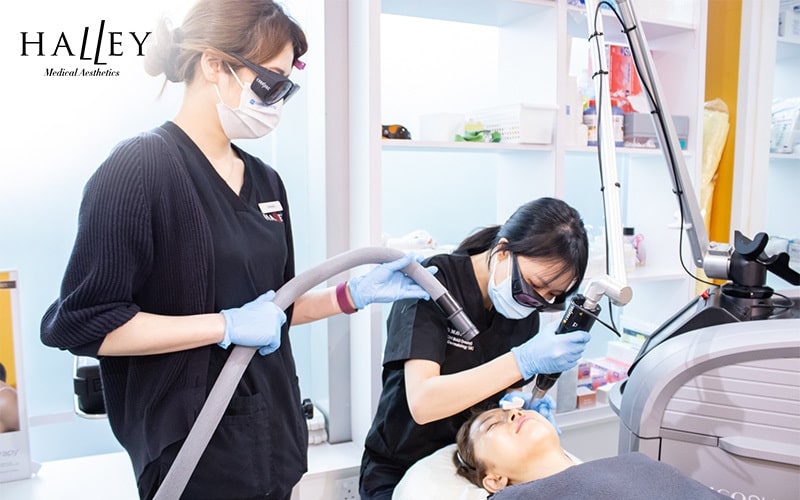
Key takeaways
- Pico laser delivers ultra-short pulses to target pigmentation and stimulate skin rejuvenation with minimal downtime.
- Fractional CO2 Laser is an ablative technique that removes outer skin layers to address deeper scars, wrinkles, and sun damage.
- The main differences when comparing Pico laser vs CO2 laser treatments lie in treatment approach, downtime, comfort levels, and suitability for specific skin concerns.
- Consulting a doctor is important to determine which option is best for your skin’s needs.
Introduction
When it comes to laser treatments in Singapore, Pico laser and Carbon Dioxide (CO2) Lasers are two popular options for addressing various skin concerns. Both methods are often recommended to address various skin concerns, from uneven skin texture to acne scars and pigmentation. However, the mechanism, recovery, and suitable concerns vary greatly.
Here’s a closer look at what sets Pico laser vs CO2 Laser treatments apart, helping you understand which may be more appropriate for your needs.
What is Pico laser?
Pico laser treatment emits energy in ultra-short bursts, measured in picoseconds (one trillionth of a second). Instead of relying on heat to break down pigments, the laser uses waves of pressure to shatter pigmentation into tiny particles, which the body naturally absorbs.
Since it does not rely on thermal damage, Pico laser is considered a form of non-ablative therapy. This means the outer layer of the skin remains intact during treatment. As a result, downtime is usually short, with most people experiencing only mild redness that subsides within a day or two.
What is Fractional CO2 Laser treatment?
Fractional CO2 Laser treatment, on the other hand, is a type of ablative laser. It works by removing precise layers of skin tissue using a concentrated beam of light. This controlled resurfacing process allows new skin to regenerate in place of the removed tissue.
A common form used today is Fractional CO2 Laser treatment, where the laser creates a pattern of microscopic columns in the skin rather than treating the entire surface at once. This approach encourages collagen renewal while leaving the surrounding skin intact, which can support faster healing compared to traditional fully ablative methods.
Pico laser vs CO2 Laser: key differences
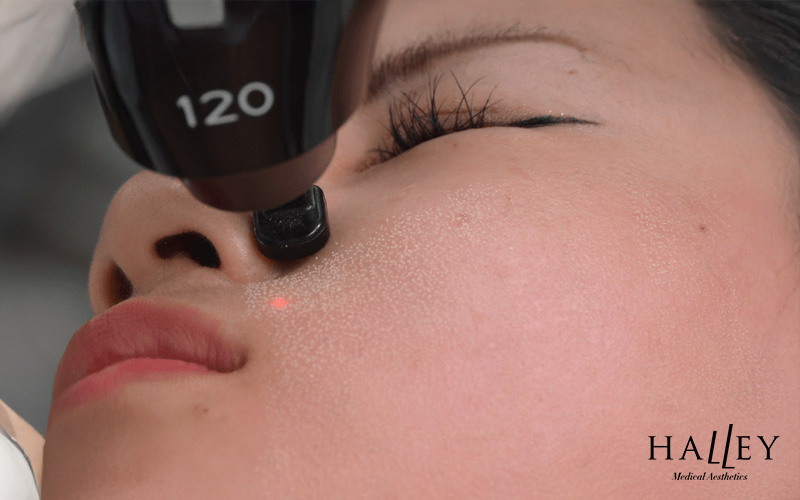
1. Treatment approach
The biggest distinction between the two treatments lies in the way they work. Pico laser treatment is non-ablative, meaning it targets tissues beneath the skin without removing the surface. In contrast, CO2 Laser is ablative, removing the top layer of skin to resurface and regenerate.
2. Downtime and recovery
When comparing Pico laser vs CO2 Laser treatments, downtime is a key factor. Pico laser usually requires little to no downtime, making it convenient for those with busy schedules. CO2 Laser, on the other hand, may require a longer recovery period, with the healing process taking anywhere from several days to weeks.
3. Comfort level
Pico laser is generally well-tolerated by patients, with mild redness or swelling that settles within a short time. CO2 Laser, which involves deeper resurfacing, can be more uncomfortable and may require numbing measures. Although recovery is longer, fewer sessions are often needed compared to Pico laser treatments.
4. Target concerns
Pico laser is used for pigmentation issues such as freckles, sunspots, and uneven skin tones. Its ability to stimulate collagen also makes it helpful for softening mild acne scars and refreshing overall skin texture. CO2 Laser, on the other hand, is more suitable for deeper and more persistent concerns. This includes pronounced wrinkles, thickened or pitted acne scars, and sun damage that affects both the surface and deeper skin layers.
Making the right choice for your skin
If you’re considering laser treatments for your skin, there’s no one-size-fits-all answer. Choosing between Pico laser and CO2 Laser treatments depends on factors such as your skin concerns, treatment goals, and tolerance for downtime. The best approach is to consult a qualified doctor, who can evaluate your needs and advise on the most appropriate treatment plan.
At Halley Medical Aesthetics, our doctors take time to understand your skin condition, lifestyle, and preferences before recommending a suitable approach. Whether a non-ablative or ablative treatment is suggested, the plan will be tailored to your needs, with safety and long-term care as key priorities. Book an appointment with us to take the first step toward making an informed choice for your skin.