Key takeaways
- Spider veins on the face are common, small dilated vessels that often appear due to genetics, UV exposure, temperature changes, hormones, or skin conditions.
- They are usually harmless but may become more visible without treatment.
- Laser therapy, including long-pulsed lasers, remains a widely used treatment option for facial veins.
- Doctors will conduct a personalised assessment to help determine the most suitable laser vein removal technique for your skin.
Key takeaways
- Blotchy skin on the face is usually due to surface inflammation, sensitivity, or temporary pigment changes.
- Sun exposure, hormonal shifts, and post-inflammatory responses are common triggers.
- Daily habits such as over-exfoliation and heat exposure can worsen uneven tone.
- Professional facial treatments may help when blotchiness persists despite good skincare.
- Long-term improvement depends on sun protection, barrier care, and gentle maintenance.
It can be frustrating to invest time and effort into skincare, only to still experience redness, uneven tone, or patchy areas on the face. For many individuals, blotchiness feels unpredictable and difficult to control, which can affect confidence and self-esteem.
Instead of covering it up with makeup, let’s take a closer look at what triggers blotchy skin on your face, the daily habits that may be making it worse, and how to achieve a more even complexion over time.
Common causes of blotchy skin
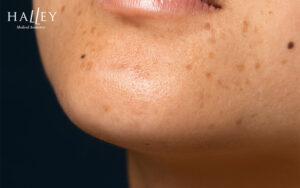
Blotchy skin refers to an uneven appearance of the skin, where areas of redness, discolouration, or irritation appear in patches rather than evenly across the face. These patches may look red, pink, or brown and can vary in intensity from day to day.
Common triggers include:
- Sun exposure: Ultraviolet (UV) rays stimulate melanin production and contribute to uneven pigmentation. It may also worsen existing redness and make uneven skin tone more noticeable, especially when sun protection is inconsistent.
- Skin sensitivity: Skincare products containing fragrance, alcohol, or strong actives (ingredients) may disrupt the skin barrier, causing skin sensitivity and pigmentation changes.
- Hormonal fluctuations: Hormonal changes during pregnancy, menopause, or hormone therapy can increase melanocyte activity or skin sensitivity, contributing to uneven pigmentation and skin tone.
- Inflammatory skin conditions: Rosacea, eczema, and contact dermatitis can cause recurring redness, irritation, flushing, or patchy discolouration. These conditions may require medication for management before considering aesthetic treatments.
- Post-inflammatory changes: After acne, eczema, or other forms of skin irritation, residual redness or discolouration may remain as part of the healing process.
These factors often overlap, which explains why blotchiness can feel unpredictable and persistent. When multiple triggers are present at the same time, the skin becomes more susceptible to recurrent redness or uneven pigmentation, even after they seem to improve.
Daily habits that may worsen blotchiness
Beyond underlying triggers, everyday habits can aggravate facial redness and uneven skin tone. Common contributors include:
- Over-exfoliation: Using scrubs, acids, or exfoliating devices too frequently can disrupt the skin barrier, increasing irritation and skin sensitivity.
- Switching skincare products frequently: Constantly introducing new skincare products gives the skin little time to adapt and can increase the risk of irritation, sensitivity, or uneven tone.
- Layering multiple active ingredients: Combining potent active ingredients, such as acids and retinoids, can overwhelm the skin and trigger redness or patchy reactions.
- Heat exposure: Hot showers, outdoor exercise during peak sun hours, or prolonged exposure to hot environments can dilate blood vessels and worsen facial redness.
- Stress and lack of sleep: Chronic stress and inadequate sleep may affect the body’s inflammatory responses and skin barrier function, making redness more difficult to manage over time.
Treatment options for persistent blotchy skin on the face
If you’re struggling with blotchy skin on your face despite consistent skincare and sun protection, you should consider professional treatment.
Pico Laser treatments
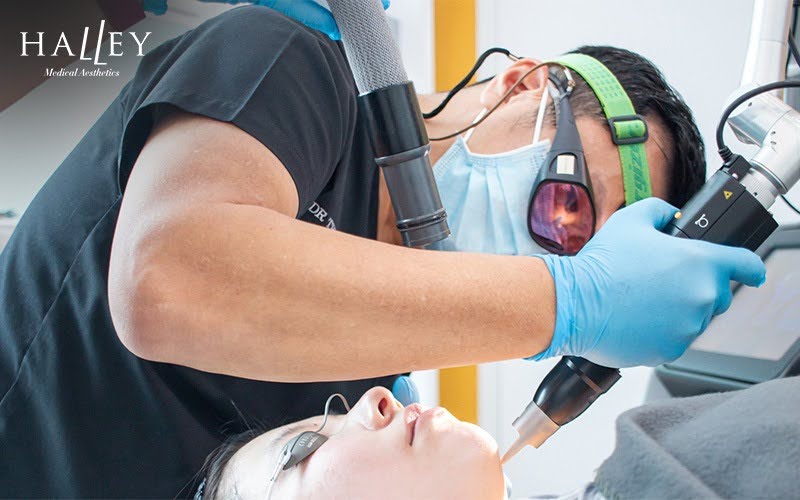
Pico Laser treatments in Singapore use ultra-short pulses of energy delivered in picoseconds to target pigment particles in the skin. Instead of relying on heat, this technology works through a photo-mechanical effect, breaking pigment into fine fragments, which are then gradually cleared by the body’s natural processes. Moreover, the extremely short pulse duration also minimises heat transfer to surrounding tissue, reducing collateral thermal injury. This makes the treatment suitable for those with sensitive skin.
Dual Wavelength Fractional Non-Ablative Laser treatments

Dual Wavelength Fractional Non-Ablative Laser stimulates skin renewal without removing the outer layer of skin. It uses two complementary wavelengths, 1550nm and 1927nm, to deliver controlled thermal energy into different layers of the skin where the energy is absorbed by water. This creates microscopic treatment zones that stimulate the skin’s natural repair process, promoting collagen remodelling and cell turnover. Over time, this can help improve skin texture and reduce the appearance of uneven pigmentation without ablating the skin’s surface.
Intense Pulsed Light (IPL)

IPL is a light-based treatment that uses a broad spectrum of wavelengths to target both excess pigmentation and visible blood vessels. Depending on the skin concern being treated, the light energy is selectively absorbed by either melanin or haemoglobin, helping to reduce visible redness and refine overall skin tone. It is commonly considered when facial redness and uneven tone are linked to vascular changes rather than pigmentation alone. This includes blotchiness caused by dilated capillaries and frequent flushing triggered by heat or exercise.
Chemical peels
Chemical peels are often used alongside device-based treatments to address surface irregularities and improve overall skin texture. At Halley Medical Aesthetics, we use a no-downtime whitening peel formulated with lactic acid, glycolic acid, and glutathione that gently exfoliates the outermost layers of skin.
This can help:
- Reduce dullness and remove dead skin cells
- Improve skin brightness and smoothness
- Support more even penetration and absorption of skincare products
At Halley Medical Aesthetics, our doctor will assess your skin thoroughly and understand whether pigmentation, redness, or surface texture plays a larger role. In some cases, laser treatment for pigmentation or redness may be combined with gentle resurfacing or chemical peels to address multiple contributing factors.
Tips for managing sensitive skin and preventing uneven pigmentation
When it comes to redness and blotchy skin on the face, protecting and calming the skin over time is often more beneficial.
Key preventive steps include:
- Using broad-spectrum SPF 50 PA+++ sunscreen daily, even on cloudy days. This helps limit cumulative UV damage and helps minimise the progression of uneven tone.
- Avoiding prolonged heat exposure where possible, such as limiting hot showers, taking breaks from direct sun, and allowing the skin to cool after exercise.
- Keeping skincare routines minimal, hydrating, and antioxidant-rich. This allows your skin barrier to recover and respond more calmly to everyday stressors.
- Scheduling gentle maintenance treatments to help maintain skin quality and reduce the recurrence of redness or uneven skin tone. When spaced appropriately, these treatments support long-term balance rather than address flare-ups only after they occur.
Conclusion
Facial blotchiness rarely has a quick or one-size-fits-all solution. It is often caused by repeated exposure and daily stressors rather than a single cause. Thoughtfully selected treatments, combined with supportive daily care, can help address the underlying contributors to uneven tone and support a more balanced complexion in the long term.
At Halley Medical Aesthetics, our doctors focus on understanding your skin’s behaviour, sensitivities, and concerns before recommending any treatment. Through a personalised consultation and the use of modern, non-invasive technologies, we guide you through care options that are aligned with your skin condition and preferences.
Contact us today.