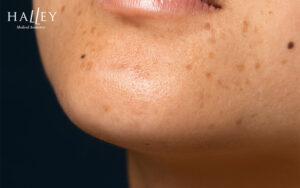
You catch yourself in the mirror and pause. Not because you developed deep wrinkles, but your cheeks seem flatter, your jawline isn’t as defined as it used to be. Even when you are well-rested, you look tired and your skin dull. Ageing is not always about wrinkles. It is often the gradual loss of facial volume and firmness that changes the way we look.
This is where HACa filler comes in.
Unlike traditional fillers that only replace lost volume, HACa filler combines support that comes right after the treatment with collagen stimulation that goes on for the next few months, making it a treatment designed to improve both facial contours and skin quality over time.
In this article, we’ll explain what HACa filler is, how it works, who it may be suitable for, and we answer some of the most common questions patients ask before considering treatment.
What is HACa filler and how it works?
HACa filler is an injectable treatment that combines two ingredients:
- Hyaluronic acid (HA), which provides immediate volume and hydration.
- Calcium hydroxyapatite (CaHA), which stimulates your skin’s natural collagen production over time
Together, these ingredients offer a dual-action approach to facial rejuvenation.
The cross-linked HA gel restores volume to areas that have become flatter due to ageing, creating a lifting and volumising effect that is visible right after treatment. Cross-linked HA is where individual HA molecules are chemically bonded together into a gel network. It is designed to remain in the skin longer in our skin compared to non-cross-linked HA while providing more sustained hydration.
However, both types of HA have their place in medical aesthetics depending on your facial contours and desired outcome. The primary purpose of non-cross-linked HA is to hydrate the skin while cross-linked HA provides structure and volume.
The tiny CaHA microspheres in the HACa filler act as a scaffold within the skin, stimulating fibroblasts and collagen production to gradually rebuild the skin’s supportive framework over the following months.
As new collagen forms, patients may notice improvements in:
- Skin firmness and elasticity
- Facial contours and definition
- Overall skin support
Rather than simply replacing lost volume, HACa filler works to restore facial support while encouraging your skin’s natural collagen production. This gradual collagen-building process is one of the reasons many patients choose HACa filler for natural-looking rejuvenation rather than dramatic changes.
Why does collagen matter as we age?
Collagen is one of the main structural proteins that keeps skin firm and resilient. From our mid-20s onwards, collagen production starts to decline. Over time, this can contribute to:
- flatter cheeks
- softer, saggy jawlines
- reduced skin firmness
- sagging around the lower face
- deeper folds and facial shadows
While dermal fillers can replace lost volume, treatments that also stimulate collagen help improve the skin’s structural support over time.
Which areas can HACa filler treat?

Depending on your doctor’s assessment, HACa filler may be used to improve areas such as:
- cheeks
- mid-face volume loss
- jawline definition
- lower face support
- facial contours
Treatment plans are not one-size-fits-all but personalised according to each patient’s facial anatomy and aesthetic goals.
Who is HACa filler suitable for?
HACa filler may be suitable for adults who are looking to:
- restore age-related facial volume loss
- improve mild to moderate skin laxity
- achieve a more defined facial contour
- stimulate collagen over time for a natural lift while enjoying improvement right away
- maintain natural-looking facial rejuvenation
Many patients choose this treatment because they want gradual improvements rather than an overfilled appearance.
A consultation with an experienced doctor is important to determine whether HACa filler is appropriate for your concerns.
What are the benefits of HACa filler?

Patients often choose HACa filler because patients can see results right away, and at the same time, it also offers longer-term benefits. They include:
- Restoration of facial volume right after treatment
- Gradual collagen stimulation over the next few months
- Firmer and lifted skin
- Improved skin firmness and elasticity
- More defined facial contours
- Natural-looking results
- Treatment completed in a single session for most patients
- No downtime
What happens during the treatment?

The procedure is performed in the clinic by a doctor.
Consultation and assessment:
After assessing your facial structure and discussing your treatment goals, the doctor determines your suitability and prescribes a personalised treatment plan for you.
Cleansing and numbing:
The clinic therapist will cleanse your face and apply numbing cream on the treatment area . The numbing cream will be left on for 15 to 20 minutes to ensure a comfortable treatment.
Injection:
The doctor proceeds with the treatment once the numbing cream is removed and injection points will be determined using the MD codes method. The doctor will inject the HACa filler into selected areas to restore support and improve facial contours. Most treatments take about 30 to 60 minutes, although treatment duration varies depending on the prescribed treatment plan.
Patients can usually return to their normal daily activities shortly afterwards, although mild swelling, redness, or bruising may occur temporarily.
Using the MD Codes injection method for HACa filler treatments

A successful filler treatment that is natural looking and achieves the treatment goal depends not only on the product used, but also on the filler injection and placement techniques used by the doctor. Every face is different and achieving natural-looking results require careful assessment and planning by an experienced doctor.
 Credit: https://pmc.ncbi.nlm.nih.gov/articles/PMC8012343/figure/Fig1/
Read more about how Halley Medical Aesthetics doctors perform filler treatments with MD Codes here.
At Halley Medical Aesthetics, our doctors are trained in the MD Codes injection technique, a structured framework and HACa injection approach that identifies strategic injection points based on your facial anatomy, ageing patterns, and aesthetic goals. By identifying specific anatomical injection points based on individual facial features and ageing changes, the framework supports a systematic approach to treatment planning rather than addressing isolated concerns alone.
For HACa filler treatments, this personalised approach helps create balanced facial contours while preserving your natural expressions and proportions, putting HACa filler where you need it most. By focusing on strategic placement instead of adding volume indiscriminately, the treatment aims to achieve subtle, harmonious rejuvenation, and reduces the likelihood of an overfilled or puffy appearance.
It is recommended that you speak to your doctor about the MD Codes or the injection technique used as treatment planning should always be guided by a thorough facial assessment, sound clinical judgement, and your individual needs.
How long does HACa filler last?
HACa filler typically lasts about 12 to 18 months. However, the longevity of results varies depending on factors such as:
- treatment area
- individual metabolism
- lifestyle
- facial movement
Your doctor can advise whether top ups or maintenance treatments are needed during your treatment review.
Can HACa filler be dissolved
HACa filler contains both HA and CaHA, so it differs from fillers made entirely of HA. The HA component can generally be dissolved using an enzyme called hyaluronidase. However, the CaHA microspheres cannot be dissolved but they are gradually broken down by the body over time.
If you have concerns about your results, it is important to consult an experienced doctor, who can assess the area and recommend the most appropriate management based on your individual situation.
Frequently Asked Questions
Is HACa filler injection painful?
Most patients describe the treatment as tolerable. The filler contains a local anaesthetic called lidocaine, and numbing cream will be applied prior to the treatment to improve comfort.
Is there any downtime?
It is a no downtime treatment and patients can resume their normal activities right after the treatment. Temporary swelling, redness, tenderness or bruising at the injection sites may occur and but they usually resolve over the next few days.
Will I look unnatural?
The goal of treatment is to restore facial support while preserving your natural facial expressions. Rather than dramatic changes, we focus on achieving natural-looking results to complement your existing facial features.
Can HACa filler be combined with other treatments?
Yes. Depending on your skin concerns and treatment goals, your doctor may recommend combining HACa filler with other aesthetic treatments as part of a personalised treatment plan.